
How to Get More Pet Owners to Leave Positive Reviews
Positive reviews are one of the fastest ways to build trust for any pet-focused business—grooming, boarding, daycare, training, pet retail, mobile services, or veterinary care.
When pet owners are choosing who to trust with a beloved companion, they look for signals that other people feel safe, respected, and delighted. Positive reviews do that job better than almost any ad.
But earning positive reviews consistently isn’t about begging, bribing, or blasting links. The best results come from a repeatable system: deliver a review-worthy experience, ask in the right moment, make it effortless to leave feedback, and respond in a way that encourages even more positive review.
One important note: “getting more positive reviews” must be done ethically and within platform rules. Major platforms are tightening enforcement against fake or incentivized reviews, and regulators are also cracking down on deceptive practices.
Google’s Maps user-generated content policy prohibits “fake engagement” and reviews that don’t reflect a genuine experience. The FTC also provides guidance and enforcement frameworks around endorsements and reviews, including rules about deceptive reviews and disclosures. And Yelp explicitly discourages asking customers for reviews.
This guide gives you a complete, practical, easy-to-implement plan to earn more positive reviews—without putting your listing, reputation, or compliance at risk.
Why Positive Reviews Matter So Much in Pet Services
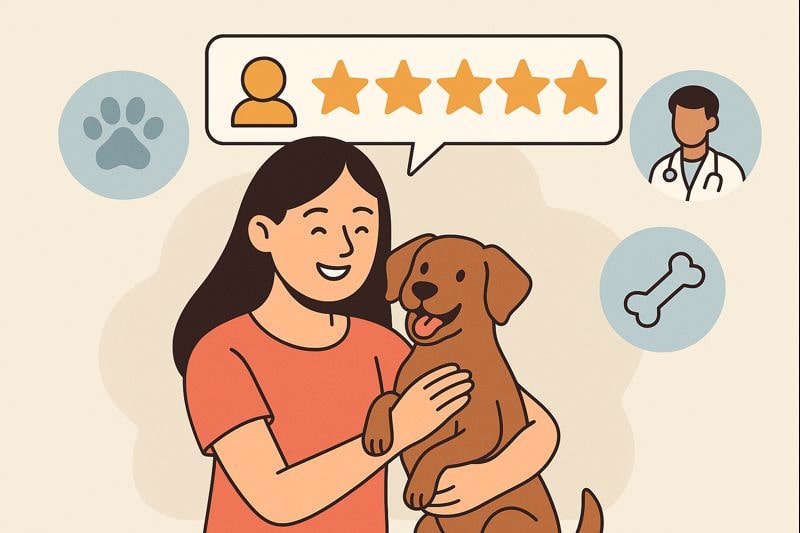
Positive reviews don’t just “look nice.” They influence how quickly a pet owner chooses you, how confident they feel before visiting, and how likely they are to pay premium prices. In pet services, trust is everything.
Pet owners are often anxious—about safety, cleanliness, kindness, handling, and communication. Positive review reduce that anxiety by showing real experiences from people like them.
Positive reviews also improve conversion rates across your marketing. If someone clicks your website, sees your social pages, or finds you in local search, a strong review profile reduces drop-off. Pet owners often compare two or three businesses quickly.
The one with more positive reviews, more recent positive review, and thoughtful responses usually wins—even if pricing is higher.
Beyond customer acquisition, positive reviews help retention. When a pet owner leaves a positive review, they psychologically reinforce their decision. It’s a form of commitment that makes them more likely to return. That’s why positive reviews can improve lifetime value, not just first-time bookings.
Finally, positive reviews create “free” content. They tell you which services people love, which staff members deliver the best experience, and which details customers mention repeatedly (gentle handling, nail trim quality, updates during boarding, calm environment).
You can turn these insights into stronger messaging, better training, and smarter service packages—creating even more positive reviews.
Know the Rules Before You Ask for Positive Reviews
Getting more positive reviews has to be done the right way. If you violate platform rules, your reviews can be removed, your profile can be restricted, or your visibility can drop. In the worst cases, your business can end up with public warnings or limitations.
Google: Focus on Real Experiences and Avoid “Fake Engagement”
Google’s policies emphasize authenticity. Reviews should reflect a genuine experience, and “fake engagement” is prohibited. This matters because some businesses try shortcuts—bulk review requests with pressure, gating who gets asked, paying for reviews, or using third parties that generate questionable activity. Those tactics can backfire.
A safe approach is simple: ask every customer the same way, avoid incentives, and never require a review to get support. Also avoid “review gating,” where you only ask happy customers to leave reviews and send unhappy customers elsewhere. Besides being risky and unethical, it can create a suspicious pattern.
Google and regulators have been increasing focus on fake reviews and manipulation. Public reporting has highlighted stronger efforts to combat fake reviews and penalize businesses that try to manipulate ratings.
So, build your plan around consistency and truth. The easiest long-term strategy for positive reviews is to earn them honestly and make leaving them effortless.
Yelp: Don’t Ask for Reviews
Yelp’s position is different. Yelp states that it doesn’t want businesses asking customers for reviews because it can create an uneven playing field. If Yelp is important for your category, focus on providing an experience that inspires customers to review you on their own.
You can still strengthen your Yelp presence by keeping your Yelp profile accurate, showcasing great photos, and responding professionally.
If you’re going to run an active “ask for reviews” campaign, prioritize platforms that permit asking—like Google Business Profile—while treating Yelp as “earn organically.”
Incentives, Disclosures, and FTC Expectations
Incentivizing reviews can create serious compliance issues. The FTC provides guidance on endorsements and reviews, including how to avoid deceptive practices and the importance of truthful, non-misleading testimonials.
If you offer anything of value in connection with reviews, you can enter a risky zone where disclosures and fairness become essential—and some platforms may prohibit it outright.
The safest route for more positive reviews: do not pay for reviews, do not offer discounts for reviews, and do not run “leave us a review for a chance to win” campaigns unless you have strong legal guidance and platform permission.
Instead, invest that budget into service upgrades and a smooth review-request system that produces positive reviews consistently.
Build a Review-Worthy Experience That Naturally Creates Positive Reviews

If you want more positive reviews, the foundation is the experience itself. Pet owners don’t write glowing feedback because you asked loudly. They write positive reviews because something felt exceptional: safety, kindness, cleanliness, skill, speed, empathy, and communication.
Start by mapping your customer journey. The experience begins before the appointment—how easy it is to book, how quickly you respond, and whether your policies are clear. It continues through check-in, the service itself, pickup, follow-up, and how you handle concerns. Every step is a chance to create positive reviews.
Focus on “review triggers”—small moments customers remember and mention. In pet services, review triggers often include: staff greeting the pet warmly by name, sending a photo update during daycare or boarding, explaining what you noticed (skin sensitivity, anxiety signs), recommending a helpful product without pressure, and being transparent about timing and price.
Also consider the pet owner’s emotional state. Many pet owners worry their pet will be stressed. To earn positive reviews, show calm control and care. Make cleanliness visible. Explain how you sanitize tools, rotate playgroups, and manage safety. People write positive reviews when you reduce fear.
Finally, eliminate common irritants: unclear pricing, long wait times with no updates, rushed handoffs, or surprise add-ons. The easiest way to increase positive reviews is to reduce the reasons for “3-star reviews” that sound like, “They were nice, but…”
Nail the Timing: When Pet Owners Are Most Likely to Leave Positive Reviews
Timing is the difference between an ignored link and a wave of positive reviews. Pet owners are most likely to write positive reviews when emotion is high and effort is low. Your job is to catch that window.
The best moment is right after the “success reveal.” For grooming, that’s when the pet owner sees the fresh cut and their pet looks comfortable. For boarding, it’s a pickup when the pet looks healthy, happy, and calm.
For training, it’s when the owner sees a real behavior improvement. For retail, it’s after a staff member helps them solve a real problem (food transition, flea prevention basics, fitting a harness).
If you wait days, the excitement fades. If you ask before the service is complete, the owner feels pressured. If you ask during a stressful moment (late pickup, payment confusion, pet anxiety), you’ll get fewer positive reviews.
A strong standard is: send the review request within 1–2 hours after service completion. If that’s not possible, send it the next morning. For boarding/daycare, a same-day request after pickup is ideal.
Also make timing consistent. When you follow the same process for everyone, you avoid “selective asking,” which can look like manipulation. And you train your customers: they come to expect a quick follow-up message, which increases positive reviews over time.
Create a Simple, Repeatable Review Request System That Gets Positive Reviews Weekly
A review system is how you stop “random luck” and start predictable positive reviews. The system should be simple enough that staff will actually follow it and consistent enough that customers recognize it.
At a minimum, your system needs: a trigger (when to ask), a channel (text/email/QR), a script (what to say), a link (where to review), and a tracking habit (how you measure results). When that system runs daily, positive reviews become routine.
The best systems use a “two-touch” approach. Touch one is a friendly ask right at the moment of delight. Touch two is a short reminder 24–48 hours later for those who didn’t respond. The reminder should be polite, not guilt-based, and it should make leaving positive reviews easy.
Your system should also protect the customer relationship. Include a support option like, “If anything wasn’t perfect, reply to this message and we’ll make it right.” This is not review gating—it’s customer service. The goal is to catch issues early so a small concern doesn’t turn into a public complaint.
When you make this process part of your daily workflow, you don’t have to “remember” to ask. You simply follow the routine. That’s how businesses stack positive reviews steadily rather than in bursts.
Use High-Converting Scripts That Encourage Positive Reviews Without Sounding Pushy
Pet owners can spot desperate review requests from a mile away. The best scripts are short, warm, and specific. They make the request feel like a natural continuation of service, not a marketing move.
Script Principles That Lead to More Positive Reviews
A strong script has three parts: gratitude, a specific reference, and a single clear action. Gratitude makes it human. Specific reference makes it feel personal. One action keeps it easy. When you do this well, positive reviews feel like a favor between people rather than a task.
Avoid: “Please leave us a 5-star review.” That sounds pushy and can raise compliance concerns. Instead, say: “If you have a minute, would you share your experience?” That invites honest feedback and still tends to produce positive reviews when the experience was great.
Also avoid long paragraphs. Many customers read messages on their phones while busy. Short, clear requests produce more positive reviews because they lower mental load.
Copy-and-Paste Scripts for Text, Email, and In-Person
Text message (best overall):
“Hi [Name]—thank you for bringing [Pet Name] in today. If you have a minute, could you share your experience here? [Link] Your feedback helps other pet owners and helps us improve.”
Email (good for longer services):
“Thanks for trusting us with [Pet Name]. We’d love to hear how everything went. If you’re willing, please leave a quick review here: [Link]. We read every comment, and it helps other pet owners feel confident choosing care.”
In-person at pickup:
“We loved having [Pet Name] today. If you get a minute later, we’d really appreciate a quick review—I’ll text you the link so it’s easy.”
These scripts work because they respect the customer, don’t demand positive reviews, and make the next step simple. Over time, consistent scripts build more positive reviews with less awkwardness.
Make It Effortless: Reduce Friction So Positive Reviews Take Under 60 Seconds
Most customers don’t avoid leaving positive reviews because they’re unhappy. They avoid it because it feels like work. Your goal is to make leaving positive reviews ridiculously easy.
First, use direct links. Don’t send customers to your homepage and expect them to find where to review. Use the exact review link for your primary platform. If you have multiple locations, make sure each location uses the correct link.
Second, prioritize mobile-first design. Most positive reviews will be written on a phone. That means your message should be short, the link should be clickable, and the landing experience should be smooth. If your link requires logging in, customers may drop off. That’s why choosing the right platform matters.
Third, consider QR codes for in-store traffic. Place a clean QR code at the counter, on receipts, or on a “thank you” card. The sign should be simple: “Share your experience—scan to leave a review.” Don’t add clutter. Friction kills positive reviews.
Fourth, eliminate decision fatigue. Don’t ask customers to choose between five sites. Pick one primary place to focus your review volume, then use other platforms organically. When customers have one obvious option, you get more positive reviews.
Finally, train staff to “set the expectation” in a friendly way: “We’ll send a quick follow-up link—thank you if you can share feedback.” When people expect the message, they’re more likely to act, which increases positive reviews.
Improve Communication During the Service to Multiply Positive Reviews
In pet services, communication is often the difference between “fine” and “amazing.” Many positive reviews mention communication more than technical skill. That’s great news because communication is easier to improve than mastering every specialized service overnight.
For daycare and boarding, provide proactive updates. A simple photo or short note like “She settled in great and is playing calmly” can produce a flood of positive reviews because it reduces worry.
For grooming, explain what you did and why. For training, summarize progress and what to practice at home. For retail, explain product choices in plain language, not jargon.
Also communicate clearly about timing. If an appointment will take longer, tell the pet owner before they have to ask. If pickup is delayed, send a quick update. People write positive reviews when they feel respected and informed.
Create small “communication moments” that are consistent. For example: a welcome message on arrival, a mid-service update for longer visits, and a pickup summary. Consistency builds confidence. Confidence turns into positive reviews.
Finally, remember the tone. Pet owners are emotionally invested. Speak with empathy, not impatience. Even when you’re busy, a calm, kind tone makes people feel safe. Safety is one of the biggest drivers of positive reviews in pet businesses.
Train Your Team to Earn Positive Reviews Without “Asking for 5 Stars”
Your team is your review engine. Even the best review link won’t help if the experience is inconsistent. Team training should focus on behaviors that reliably produce positive reviews.
Start with a simple standard: every customer gets greeted warmly, every pet gets acknowledged kindly, and every pickup includes a quick summary. Those three habits alone can increase positive reviews dramatically because they turn an ordinary transaction into a relationship.
Next, teach “micro-recovery.” If something goes wrong—running late, a grooming style mismatch, a scheduling issue—train staff to acknowledge it quickly and offer a clear fix. Many negative reviews happen because customers feel dismissed.
When staff responds with ownership and solutions, customers often still leave positive reviews because they see integrity.
Also create a culture of names. Using the pet’s name and the owner’s name creates instant connection. People mention that in positive reviews all the time because it feels personal.
Finally, give your team language that doesn’t feel salesy: “If you found today helpful, a quick review means a lot.” It’s not about demanding positive reviews. It’s about inviting customers to share an experience they already liked.
Respond to Reviews Like a Pro to Attract Even More Positive Reviews
Your responses to reviews are not just for the reviewer. They’re for every future pet owner reading your profile. A thoughtful response can turn one positive review into many more positive reviews because it shows your values.
For positive reviews, reply with gratitude and a specific detail. If someone mentions gentle handling or a clean facility, echo that. It reinforces what you want others to notice. Keep it short, warm, and human.
For neutral or negative reviews, respond calmly and professionally. Don’t argue. Don’t reveal private details. Acknowledge feelings, explain what you can, and invite offline resolution. A professional response often impresses readers and can protect your reputation more than the review itself.
Also respond quickly. Recency signals matter to customers. When people see active management, they assume you’re attentive. That makes them more likely to choose you and later leave positive reviews.
One more important compliance note: don’t pressure someone to remove feedback in exchange for anything. Platforms and policies are increasingly focused on manipulation behaviors, and you want your approach to be clean and sustainable.
Turn Negative Feedback Into Future Positive Reviews
If you want more positive reviews, you can’t ignore negative feedback. The smartest businesses treat negative feedback as a conversion opportunity—handled correctly, it can turn into later positive reviews from the same customer.
First, create a fast escalation process. If a customer replies to your review request with a complaint, respond quickly and kindly. Time matters because emotions cool down. Offer a clear next step: a call, a redo, a partial refund if appropriate, or a service credit only when it’s allowed and ethical. Be careful not to tie compensation to review changes.
Second, document patterns. If multiple reviews mention long waits, pricing surprises, or communication gaps, that’s not “bad customers.” That’s a system issue. Fixing one recurring issue can increase positive reviews across hundreds of future visits.
Third, follow up after resolution. If you made something right, send a friendly message: “Thanks again for giving us the chance to fix that. We appreciate you.” Often, customers will update their review or leave a new positive review because they feel heard.
Finally, don’t aim for perfection. A profile with only perfect reviews can look suspicious. A few imperfect reviews with excellent responses can actually build trust and encourage more positive reviews because it feels real.
Use Photos, Small Surprises, and “Shareable Moments” to Spark Positive Reviews
Pet owners love sharing. If you design the experience with “shareable moments,” you’ll get more positive reviews and more social buzz at the same time.
Photos are the easiest lever. For grooming, take a quick after photo with good lighting and a clean background. For daycare/boarding, capture playtime or calm resting moments. Ask permission when needed.
Then send the photo with your review request. When the pet owner is smiling at a cute photo, they’re more likely to leave positive reviews.
Small surprises help too. It doesn’t need to be expensive. A bandana after grooming, a “report card” for daycare, a handwritten note for first-time boarding, or a simple treat (when safe and approved) creates delight. Delight drives positive reviews.
Also highlight milestones. “First grooming,” “graduated training basics,” “100th visit,” or “adoption anniversary” are emotional triggers. People love celebrating pets, and those celebrations turn into positive reviews.
The key is to make the shareable moment feel authentic, not gimmicky. The goal isn’t to manipulate. It’s to create happiness worth talking about—which naturally produces positive reviews.
Build Review Requests Into Booking, POS, and Follow-Up Without Spamming
To scale positive reviews, you need light automation. Not complicated. Just consistent.
If you use online booking, include a post-appointment message that thanks the customer and shares the review link. If you use a POS system, capture mobile numbers and emails correctly and ask permission for follow-up messages.
If you use a CRM, tag customers by service type so your message can reference what they did (grooming vs boarding).
But avoid spam. Sending too many messages can reduce positive reviews because customers get annoyed. A good frequency is: one request shortly after service, one reminder later, then stop. Don’t keep pinging.
Also rotate your wording slightly so it feels natural. Keep the message short. And ensure your staff doesn’t also send a second manual request if the system already did.
Most importantly, keep it honest. Don’t send review requests to people who didn’t actually receive service. Don’t batch-upload lists sloppily. Authenticity is the long game for positive reviews, and enforcement against fake or misleading review behavior is increasing across platforms and regulators.
Track What Produces Positive Reviews and Improve Weekly
If you don’t measure, you can’t improve. The goal isn’t just “more positive reviews.” The goal is more positive reviews per 100 customers, and more recent positive reviews every week.
Start tracking these basics:
- How many customers served weekly
- How many review requests sent
- How many positive reviews received
- Which staff members or services generate the most positive reviews
- What themes appear in positive reviews (kindness, speed, cleanliness, communication)
Then run small experiments. Change the timing. Improve the script. Add a photo. Test QR code placement. Train staff on pickup summaries. Small improvements can lift positive reviews without major cost.
Also watch recency. A steady stream of positive reviews is more persuasive than a big burst once a year. Make it a habit—set a weekly target and assign one person to monitor it.
Finally, connect reviews to operations. If positive reviews mention “gentle with anxious dogs,” that’s a strength worth reinforcing in training and marketing. If reviews mention “hard to reach by phone,” that’s a fix that can unlock more positive reviews quickly.
Future Predictions: Where Positive Reviews Are Headed Next
The future of positive reviews will be shaped by three trends: stricter trust enforcement, richer content formats, and smarter customer expectations.
First, enforcement will keep tightening. Platforms and regulators are increasingly focused on review authenticity, deceptive practices, and manipulation patterns. Google policies already emphasize genuine experiences and prohibit fake engagement.
The FTC continues to provide guidance and frameworks around endorsements and reviews. That means the “shortcut era” will keep shrinking. Businesses that build ethical systems will win long-term.
Second, reviews will become more multimedia. More customers will post photos and short videos. In pet services, this is huge—photos of happy pets are powerful trust signals. Businesses that encourage customers to share pet photos (without incentives and without pressure) will see stronger conversion and more positive reviews.
Third, customers will expect faster, more human responses. Review responses will matter more, not less. A thoughtful reply to a positive review will become part of the brand voice. And a calm response to criticism will be a public demonstration of professionalism.
The best future-proof strategy is simple: deliver excellent service, communicate clearly, ask consistently (where allowed), and make the process easy. That combination will keep producing positive reviews even as rules and algorithms evolve.
FAQs
Q.1: How do I ask for positive reviews without sounding desperate?
Answer: The trick is to ask for feedback, not “5 stars.” Pet owners respond well to warmth and clarity. Thank them, reference their pet or service, and give one easy link. When you say, “Could you share your experience?” you’re inviting honesty. If your service was good, honesty becomes positive reviews naturally.
Also keep it short. Long messages feel like marketing. Short messages feel like a human request. Avoid guilt language like “we really need this.” Instead use purpose: “It helps other pet owners” and “we read every comment.”
That makes positive reviews feel meaningful.
Finally, ask at the right time—right after a great moment. A good script at the wrong time gets ignored. A simple script at the right time generates positive reviews with no awkwardness.
Q.2: Can I offer discounts or gifts in exchange for reviews?
Answer: It’s risky and often not allowed. Many platforms prohibit incentivized reviews or treat them as manipulation. Google’s policies focus on genuine experiences and prohibit fake engagement.
On the regulatory side, the FTC’s guidance and rules emphasize avoiding deceptive review practices and being transparent about endorsements.
Even when incentives are technically possible with proper disclosures, they can create trust issues. Customers may assume your positive reviews were “bought,” which reduces the value of the review profile.
The best approach is to invest in service quality and a smooth request process. That produces more positive reviews long-term without compliance headaches.
Q.3: What if a customer had a good experience but still won’t leave a review?
Answer: That’s normal. Most happy customers stay silent unless you make it easy and timely. Use a two-touch system: one request within hours of service completion, one friendly reminder 24–48 hours later. Keep both messages short.
Include a direct link. For in-person visits, a QR code at checkout can capture customers who prefer doing it immediately.
Also add “shareable moments.” A cute photo or a short “today went great” note can push someone from “I should” to “done.” And train staff to set expectations: “We’ll send a quick follow-up link.” When customers expect it, positive reviews go up.
Q.4: Should I focus on one platform or multiple platforms for positive reviews?
Answer: Start with one primary platform where reviews drive the most discovery for your business—commonly Google Business Profile for local visibility. Build momentum there so you get consistent, recent positive reviews. Once you have a strong flow, you can expand.
Be careful with platforms that discourage asking. Yelp, for example, says “Don’t Ask for Reviews.” If Yelp matters in your niche, aim to earn reviews organically there by delivering an experience customers feel inspired to talk about. For active asking campaigns, focus on platforms that permit it and keep your process compliant.
Q.5: How many positive reviews do I need per month?
Answer: There’s no magic number. What matters is consistency and recency. A steady stream of positive reviews is more persuasive than big spikes.
A practical target for many pet businesses is to aim for a small percentage of customers to leave reviews each week. For example, if you serve 200 customers a month, even 8–15 positive reviews monthly can create strong momentum over time.
Track your “reviews per 100 customers” rate and try to improve it gradually. Small operational improvements—better timing, clearer scripts, smoother handoffs, proactive updates—can lift your positive reviews without increasing marketing spend.
Conclusion
Getting more positive reviews from pet owners isn’t about pressure or gimmicks. It’s about building trust at every step and making it easy for happy customers to share their experience. The most reliable strategy is a simple system: deliver a review-worthy experience, ask at the right moment, use a short and warm script, send a direct link, and follow up once.
Keep your approach compliant and future-proof. Platforms are increasingly strict about authenticity, and policies emphasize genuine experiences and avoiding fake engagement.
Regulators also continue to focus on deceptive review practices and endorsements. If you stay honest, consistent, and customer-centered, your positive reviews will grow steadily—week after week—while your reputation becomes one of your strongest assets.