Social Media Marketing Strategies for Veterinary Professionals
Social media marketing for veterinary professionals is no longer optional—it’s where pet owners spend their time, do their research, and decide who to trust with their animals’ care.
In the US, pet ownership and spending on veterinary services continue to rise, and social platforms like Facebook, Instagram, TikTok, and YouTube have become primary discovery and decision channels for local vets, specialty clinics, and mobile practices.
An effective social media marketing strategy for veterinary professionals helps you attract new clients, educate pet parents, build loyalty, and stand out in a crowded local market.
In this guide, we’ll walk through practical, up-to-date social media marketing strategies, content ideas, platform tips, and future trends tailored specifically to veterinarians and veterinary practices in the United States.
The goal is to make social media marketing easier, more intentional, and more measurable—so you’re not just posting cute pet photos, but building a strong, trusted veterinary brand online.
Understanding the Role of Social Media in Veterinary Marketing
Social media for veterinary professionals is essentially digital word-of-mouth. Pet parents use platforms like Facebook, Instagram, and TikTok to ask for recommendations, read reviews, watch behind-the-scenes content, and assess whether a veterinarian feels caring, competent, and trustworthy.
A strong social media marketing strategy for veterinary professionals helps you be visible and credible at exactly these decision moments.
From a business perspective, social media supports every stage of the client journey. At the awareness stage, posts and short-form videos introduce your veterinary practice to local pet owners. At the consideration stage, educational content, case stories, and reviews demonstrate your expertise and compassion.
At the decision and loyalty stages, reminders about wellness plans, preventive care campaigns, and convenient online booking help drive appointments and keep clients coming back. Social platforms also let you quickly communicate updates about seasonal hazards, holiday hours, or outbreaks like kennel cough or leptospirosis in your area.
Social media marketing is also one of the most cost-effective strategies for veterinary professionals. You can reach thousands of local pet owners organically with smart content and targeted hashtags, then amplify your best posts with low-cost paid campaigns.
Compared to print mailers or billboards, platforms like Meta Ads (Facebook and Instagram) and Google’s Performance Max allow very precise location and demographic targeting.
As the pet care industry becomes more competitive—with corporate consolidators, telehealth startups, and mobile clinics entering the market—social media can be a powerful differentiator that highlights your practice’s unique personality and values.
Looking ahead, social media’s role in veterinary marketing will only grow. Younger pet parents (Millennials and Gen Z) are highly influenced by creators and online reviews, and they expect businesses to be responsive on social channels.
Practices that invest in a cohesive social media marketing strategy now will have a long-term advantage in client acquisition, retention, and reputation management.
Defining Your Ideal Veterinary Client and Social Media Goals
Before posting, veterinarians need clarity on who they are trying to reach and what they want those people to do. A strong social media marketing strategy for veterinary professionals starts with defining your ideal client profile and setting measurable goals.
For most US practices, ideal clients are local pet parents who prioritize preventive care, follow recommendations, and value long-term relationships with their veterinary team. However, your target might be more specific: cat-only households, working dog owners, exotic pet enthusiasts, equine clients, or high-income urban professionals.
Take time to outline one or two client personas. Include details like age range, location radius, typical pets, lifestyle, concerns (e.g., cost, anxiety, behavior), and digital habits (Facebook groups, Instagram Reels, TikTok, YouTube).
Knowing whether your best clients hang out on Facebook or TikTok helps you prioritize platforms and tailor your content format, tone, and posting times accordingly.
For example, a family-focused suburban small animal practice might concentrate on Facebook and Instagram, while an equine sports medicine vet might lean on Facebook groups, YouTube, and LinkedIn.
Once you understand your ideal client, define 3–5 clear social media goals. These might include increasing appointment requests, generating more dental cleanings or wellness plan enrollments, growing online reviews, or boosting new client inquiries from social channels by a certain percentage.
Goals should be specific and measurable, such as “Generate 20 new appointment requests from Facebook per month” or “Increase Instagram followers by 30% in six months while maintaining engagement above 5%.”
Tying goals to real business outcomes keeps your social media marketing strategy aligned with your practice’s growth and revenue targets.
Future-forward veterinary practices will continue to refine their target audiences as neighborhood demographics change and new services emerge, such as teletriage, integrative medicine, or fear-free certifications.
Your ideal client profile and goals are not fixed; revisit them at least once a year to ensure your social media strategy for veterinary professionals stays relevant, focused, and effective.
Choosing the Right Social Platforms for Veterinary Professionals
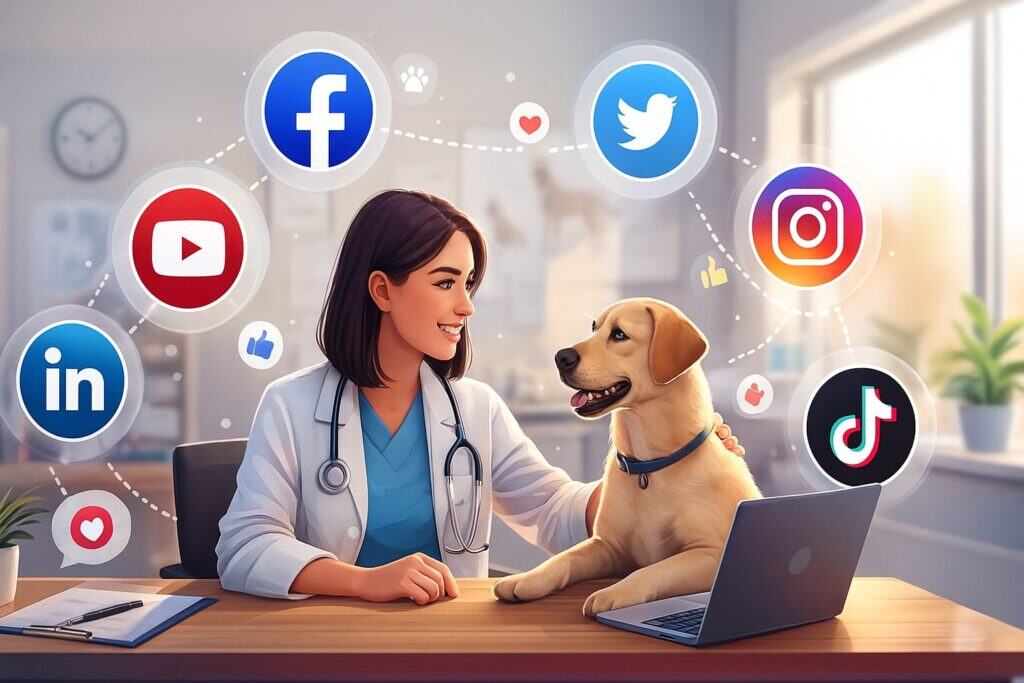
Not every social network is equally valuable for veterinary professionals, and spreading yourself too thin makes it almost impossible to produce consistent, quality content. It’s smarter to choose two or three platforms and execute your social media marketing strategy for veterinary professionals really well there, instead of posting randomly everywhere.
For most US veterinary practices, Facebook remains important because of its local focus, community groups, and event features. It’s ideal for sharing clinic updates, photos, long-form posts, links to blog articles, and reminders.
Many pet parents still rely on Facebook recommendations and reviews when choosing a veterinarian, making it a cornerstone platform for reputation-building.
Instagram is powerful for visual storytelling—before-and-after photos, behind-the-scenes stories, and short Reels showcasing cute patients or quick tips. With the growth of Reels, Instagram has become a discovery engine that can surface local content to nearby users.
TikTok is increasingly relevant, especially if your ideal clients include younger pet owners. Short, entertaining, and educational videos perform well, and veterinary professionals can quickly build large followings by sharing quick tips, myth-busting content, or interesting but non-graphic medical cases.
YouTube is also a valuable channel for deeper educational content, such as 5–10-minute videos on dental care, at-home grooming, or what to expect during a first puppy visit. These videos can double as resources you send clients directly, saving your team time while reinforcing recommendations.
LinkedIn can be important for veterinary specialists, practice owners, and those who want to network with other professionals, referral partners, or industry vendors. While it’s not primarily for client acquisition, it supports your professional brand, hiring efforts, and B2B relationships.
Over the next few years, platform algorithms will continue to favor short-form video, authentic content, and meaningful engagement over purely promotional posts. Veterinary professionals who align their social media strategy with these trends—while staying true to their brand—will see better reach and stronger client relationships.
Building a Strong and Trustworthy Veterinary Brand Online
Branding isn’t just for big corporate hospitals—independent veterinary professionals need clear, consistent branding on social media to stand out and attract the right clients.
A veterinary brand is the combination of your visual identity, messaging, tone, values, and the emotional experience you create for pet owners. A strong brand makes your posts instantly recognizable in busy feeds and supports a consistent social media marketing strategy for veterinary professionals.
Start with the basics: logo usage, brand colors, and typography for your graphics. Even simple, clean templates using your colors and logo can elevate your social presence and make your posts more cohesive.
Tools like Canva allow your team to quickly create branded posts for appointment reminders, wellness tips, promotions, and announcements. Next, clarify your brand voice.
Are you warm and conversational, clinical and precise, humorous and playful, or a mix depending on the context? Vet practices serving anxious pet parents may emphasize empathy and reassurance, while specialty practices might lean into expertise and innovation.
Your brand should also reflect your core values—fear-free handling, transparent pricing, proactive preventive care, or advanced diagnostics, for example.
Sharing behind-the-scenes content of your team training, demonstrating low-stress handling, or explaining why you recommend certain procedures helps align perception with your values. Over time, clients will associate your brand with specific feelings and expectations, which is crucial for loyalty and referrals.
In the future, as more consolidated veterinary brands appear, independent practices can use social media branding to highlight their local roots, continuity of care, and personalized relationships.
Authentic, consistent branding also positions veterinary professionals for collaborations with local businesses, shelters, or even pet influencers, further amplifying their reach and impact online.
Content Strategy: Educational, Entertaining, and Empathetic Posts
A successful social media marketing strategy for veterinary professionals relies on delivering the right mix of content types: educational, entertaining, and empathetic. Educational content positions you as an expert and helps clients make informed decisions.
Entertaining content attracts attention and encourages shares. Empathetic content builds trust and emotional connection. Balancing these three pillars ensures your feed isn’t just a series of promotions or cute photos, but a valuable resource for pet owners.
Educational posts might include short tips on parasite prevention, vaccination schedules, dental health, weight management, or signs of common conditions.
Break complex topics down into simple, actionable advice—such as how to brush a dog’s teeth, what to pack for a road trip with a cat, or how to introduce a new puppy to the household. Use carousels, Reels, or short videos to explain one concept at a time and invite users to save the post for later.
Over time, this type of content supports compliance with your medical recommendations and leads to healthier pets and more predictable appointment bookings.
Entertaining content can center on patient spotlights (with owner permission), “day in the life of a vet tech” reels, funny pet bloopers, or trends adapted from TikTok and Instagram.
While these posts may not be deeply educational, they help humanize your team, increase engagement, and expand your reach. Just ensure that any humor is respectful, non-graphic, and aligned with your professional standards. Avoid sharing content that might be distressing or that reveals sensitive medical details.
Empathetic content focuses on acknowledging client emotions—anxiety before surgery, grief after euthanasia, or guilt over missed preventive care. Posts that share supportive messages, explain what to expect during tough visits, or highlight your team’s compassionate approach help clients feel seen and understood.
This can be as simple as a carousel explaining how you support nervous pets or a short video about your euthanasia process and aftercare options.
Going forward, algorithms will increasingly reward content that sparks genuine comments and saves rather than shallow likes. Veterinary professionals who create content that informs, entertains, and empathizes will see better organic reach and stronger client relationships than those who only post promotions or cute images without context.
Visual Storytelling: Images, Reels, and Short-Form Video
Visual content is at the heart of social media marketing, especially for veterinary professionals, because pets naturally make for compelling imagery. Platforms like Instagram, TikTok, Facebook Reels, and YouTube Shorts prioritize video and dynamic content in their feeds.
Incorporating visual storytelling into your social media marketing strategy for veterinary professionals can dramatically improve engagement, reach, and recall.
High-quality photos of patients, your team, and your facility create an immediate emotional connection. Always secure written or digital consent from owners before sharing identifiable pets, and avoid sharing any sensitive medical information without explicit permission.
Use a mix of candid and posed shots—happy post-visit photos, pets ringing a “cancer-free” bell, or behind-the-scenes snapshots of your team preparing for surgery. Natural lighting and simple backgrounds go a long way in making images look professional without needing expensive equipment.
Short-form video is where social media attention is heading. Reels and TikTok clips can showcase quick tips, step-by-step demonstrations (like nail trimming or administering oral medications), and myth-busting segments on common pet health misconceptions.
Videos showing low-stress handling, gentle restraint techniques, or your approach to feline-friendly exams not only educate but also reduce client anxiety. Adding captions is critical, as many viewers watch without sound; this also makes your content more accessible.
Storytelling frameworks can help structure your videos: Problem–Solution–Outcome, Before–During–After, or Question–Answer.
For example, a 30-second video might follow a nervous dog entering the clinic, being handled with fear-free techniques, and leaving relaxed, with a short explanation of what you did differently. Over time, these visual narratives reinforce your expertise and the quality of your care.
Future trends suggest even greater emphasis on vertical video, interactive features like polls and Q&A stickers, and possibly more AI-driven content recommendations.
Veterinary professionals who become comfortable on camera now—and empower team members to participate—will be better positioned to attract younger, digitally native clients and maintain visibility as algorithms continue to favor engaging, authentic visual content.
Posting Frequency, Timing, and Consistency for Vet Practices
Consistency matters more than perfection in social media marketing for veterinary professionals. Pet owners expect active, responsive businesses, and dormant profiles can send the wrong signal about your practice’s availability or relevance.
That said, you don’t need to post every day to be effective; a sustainable schedule that your team can maintain is more important than short bursts of activity followed by long gaps.
For most US veterinary practices, starting with 3–5 posts per week on your primary platform (usually Facebook and/or Instagram) is a realistic goal. You might aim for one Reels or short-form video, one educational carousel, one patient spotlight, and one general update or announcement.
On secondary platforms like TikTok or YouTube, even 1–2 high-quality posts per week can build momentum over time. Use a simple content calendar to plan themes for each week or month—dental health in February, parasite prevention in spring, senior pet care in November, and so on.
Timing can influence performance, but it’s less critical than content quality and consistency. Many pet owners are most active on social media in the early morning, lunch breaks, and evenings, as well as weekends.
Most platforms provide insights on when your followers are active; review this data monthly and adjust your posting times accordingly. Experiment with different days and times, then lean into what works best for your audience.
Consistency also means maintaining a recognizable style and voice. Use similar color schemes, formatting, and post structures so viewers quickly recognize your content in their feeds.
Over time, this consistency builds brand equity and makes your social media marketing strategy for veterinary professionals more effective, because people start to associate your posts with trustworthy, helpful information.
Looking ahead, scheduling tools and AI assistants will make it even easier for vet practices to batch-create and schedule content while maintaining consistency. Practices that build a strong, sustainable posting routine now will adapt more easily to future algorithm changes and new content formats without burning out their teams.
Engaging With Pet Owners: Comments, Messages, and Community Building
Social media marketing for veterinary professionals is not just about broadcasting information; it’s about building a community. How you respond to comments, messages, and mentions shapes clients’ perception of your responsiveness and care.
Prompt, friendly engagement can turn casual followers into loyal advocates, while slow or cold responses can erode trust.
Develop simple guidelines for how your team should handle interactions. For example, aim to respond to comments within 24 hours and direct messages within a business day whenever possible. Use a warm, empathetic tone, address people by name when appropriate, and show appreciation for their questions or kind words.
Avoid giving specific medical advice in public comments; instead, provide general guidance and invite the pet owner to call the clinic or schedule an exam for tailored advice. This protects both patient safety and your liability while still offering value.
You can also proactively encourage engagement by asking questions in your posts: “What’s your cat’s favorite toy?” “Does your dog love or hate bath time?” “What questions do you have about senior pet care?”
These prompts invite conversation and increase the chances your content will appear in more feeds. Hosting occasional Q&A sessions via Stories or live streams can deepen relationships, especially when you address common concerns like diet, grooming, or behavior.
Community building can extend beyond your own page. Participate in local Facebook groups, collaborate with shelters or rescues, and engage with local pet-related businesses such as groomers, trainers, and pet stores.
Tag partners when appropriate and share their content when it aligns with your values. Over time, you’ll be seen as an active, supportive member of the local pet community—not just a service provider.
In the future, direct messaging, chatbots, and integration with appointment systems will become even more important. Veterinary professionals who set clear boundaries—like no emergency triage via DM—but still respond helpfully and promptly will strike the right balance between client convenience and safe medical practice.
Paid Social Media Advertising for Veterinary Practices
Organic reach is valuable, but paid social media advertising can accelerate growth and support specific business goals, such as increasing new client appointments, promoting wellness plans, or filling seasonal slow periods.
Platforms like Facebook and Instagram offer robust targeting options that are particularly useful for localized veterinary marketing, making paid ads a powerful component of a social media marketing strategy for veterinary professionals.
Start by defining a clear objective for each campaign. Common objectives for vet practices include driving traffic to an online booking page, generating calls, boosting specific posts, or increasing awareness in a new neighborhood.
Use geographic targeting to focus on zip codes or radius around your clinic location, typically within 5–15 miles depending on your area. You can also refine by demographics and interests, such as “pet owners,” “dog lovers,” or “cat lovers,” though privacy changes have reduced some targeting granularity.
Creative assets matter. For ad visuals, use high-quality images of real patients (with permission) or short videos showing your team interacting kindly with animals. Avoid graphic surgical content or anything that may distress viewers.
Ad copy should be clear, benefit-driven, and include a strong call to action, such as “Book your pet’s wellness exam online today” or “Schedule a dental checkup and get a free at-home care kit.” Highlight any differentiators, like fear-free certification, extended hours, or in-house diagnostics.
Budget-wise, even modest daily spends can generate meaningful results for local vet practices. You might start with $5–$20 per day for 2–4 weeks, then review performance. Track metrics such as link clicks, cost per result, calls generated, and actual appointments booked.
Over time, you can build retargeting audiences that show ads to people who have visited your website or engaged with your content, increasing efficiency.
Looking forward, paid social advertising will likely continue to integrate with booking systems and CRM tools, making it easier to track ROI from ad to appointment.
Veterinary professionals who learn the basics of paid ads—or work with trusted marketing partners—will be able to scale successful campaigns and remain competitive even as local ad costs rise.
Measuring Success: Analytics, KPIs, and Continuous Improvement
Without measurement, it’s impossible to know whether your social media marketing strategy for veterinary professionals is working.
Analytics and key performance indicators (KPIs) help you understand what’s resonating with your audience, which platforms are most effective, and where to focus your time and budget. Even basic tracking can significantly improve your decision-making and results.
Start by identifying a small set of KPIs that align with your goals. For awareness, you might track reach, impressions, follower growth, and video views. For engagement, monitor likes, comments, shares, saves, and story replies.
For conversion, track link clicks, calls from social profiles, appointment requests, and new client forms mentioning social media. Many platforms offer built-in analytics, and tools like Google Analytics can help you see how much website traffic and how many conversions come from social channels.
Create a simple monthly reporting routine. Spend 30–60 minutes reviewing top-performing posts, follower growth, engagement rates, and any spikes in inquiries or appointments related to specific campaigns.
Ask questions like: Which content types get the most saves and shares? Do Reels or static images perform better for our audience? Are certain topics—like dental care or nutrition—getting more traction? Use these insights to adjust your content mix and posting schedule.
It’s also helpful to track qualitative signals. Are clients mentioning your social media at check-in? Are they referencing specific posts or videos? Are more people aware of your wellness plans, seasonal promotions, or telehealth options before you mention them in the exam room?
These anecdotal signs complement quantitative metrics and highlight the real-world impact of your social media efforts.
In the future, analytics tools will become more unified and AI-driven, making it easier to predict which content will perform well and how to optimize your social media marketing strategy for veterinary professionals.
Practices that already have a culture of measuring and iterating will be able to adopt new tools quickly and stay ahead of less data-savvy competitors.
Future Trends in Social Media Marketing for Veterinary Professionals
The landscape of social media marketing changes rapidly, and veterinary professionals must stay adaptable. While core principles like authenticity, education, and community will remain, how they’re executed will evolve significantly over the next few years.
Understanding these trends helps you future-proof your social media marketing strategy for veterinary professionals and make smarter investments in content and technology.
Short-form vertical video will continue to dominate. Platforms are heavily prioritizing Reels, TikTok-style content, and YouTube Shorts, and this trend is unlikely to reverse.
Veterinarians who become comfortable on camera—and empower their teams to participate—will maintain an edge in visibility and engagement. AI tools will increasingly assist with script generation, captioning, translation, and even basic video editing, allowing busy practices to produce more content with less time.
Social commerce and frictionless booking will become more common. While selling products directly through platforms may not be the primary focus for most vet practices, integrated “Book Now” buttons, direct messaging automations, and connections to practice management software will streamline the path from social post to appointment.
Clients will expect to take action—book, refill, or ask a basic question—without leaving the app they’re in.
User-generated content and micro-influencers will also grow. Local pet influencers or even your own clients with engaged followings may become valuable partners for campaigns promoting dental month, wellness plans, or new services.
Ethical guidelines and transparency will be crucial—always disclose partnerships and avoid making medical claims that are not supported by evidence.
Finally, there will be increased attention on digital well-being, misinformation, and online professionalism. Veterinary professionals who maintain high ethical standards, avoid sensational or misleading content, and use social media to promote accurate, evidence-based information will build long-term trust.
As AI-generated pet health content becomes more common, the human, compassionate voice of a real veterinary team will be a powerful differentiator.
FAQs
Q1: How much time should a veterinary practice spend on social media each week?
Answer: Most practices can see meaningful results by dedicating 2–4 hours per week to social media marketing. This time can cover planning, content creation, posting, and engagement. Some clinics batch content once per month and then spend a few minutes per day responding to comments and messages.
The key is consistency rather than sheer volume. If your team is small, consider assigning one “social media champion” or partnering with a veterinary-savvy marketing agency to support your efforts.
Q2: Do veterinary professionals need to be on every social media platform?
Answer: No. It’s better to be strong on two platforms than weak on five. Focus on where your ideal clients already spend their time.
In the US, Facebook and Instagram are usually the best starting points for veterinary practices, with TikTok and YouTube as powerful additions if you have the capacity for video. You can always expand later once you have a solid base and a repeatable content workflow.
Q3: What types of posts perform best for veterinary practices?
Answer: Content that is educational, visual, and emotionally engaging typically performs best. Short videos with quick tips, patient spotlights, behind-the-scenes glimpses, and myth-busting posts are especially effective.
Seasonal content tied to parasites, allergies, holidays, or travel can also drive high engagement. Always pair compelling visuals with concise, helpful captions and clear calls to action to maximize impact.
Q4: How can veterinarians handle negative comments or reviews on social media?
Answer: Negative feedback is inevitable, but how you respond matters. Acknowledge the person’s concern, remain calm and professional, and avoid discussing specific medical details in public. Offer to continue the conversation privately via phone or email.
For example, “We’re sorry to hear about your experience. We take these concerns seriously and would like to discuss this further. Please call us at [phone number] so we can learn more and try to make it right.” Consistent, respectful handling of criticism demonstrates integrity and can actually build trust with other followers.
Q5: Is it safe to give medical advice on social media?
Answer: Veterinary professionals should be cautious and avoid providing individualized medical advice online. Instead, focus on general education and encourage followers to schedule an exam for pet-specific recommendations.
Make it clear that social media content is for informational purposes only and is not a substitute for a veterinary visit. If someone describes a concerning symptom, the safest response is to recommend contacting their veterinarian or an emergency clinic immediately.
Conclusion
Social media marketing for veterinary professionals is one of the most powerful ways to attract new clients, educate pet parents, and build a loyal community around your practice.
By understanding your ideal client, choosing the right platforms, and developing a clear content strategy that blends education, entertainment, and empathy, you can turn your social profiles into an extension of your exam rooms—places where trust, care, and communication thrive.
A thoughtful social media marketing strategy for veterinary professionals doesn’t require expensive equipment or a full-time marketer. It requires consistency, authenticity, and a willingness to experiment and learn from your analytics.
Start with a manageable posting schedule, prioritize high-impact platforms like Facebook and Instagram, and lean into visual storytelling with photos, Reels, and short-form videos that showcase your expertise and compassion.
As trends evolve—toward more video, AI-assisted tools, and integrated booking—practices that are already active and intentional on social media will be best positioned to adapt and grow.
Ultimately, the real value of social media for veterinarians lies in the relationships it helps you build: with pet owners who trust you, with team members who are proud to represent your practice, and with a broader community that sees your clinic as a vital partner in animal health and well-being.
By investing in smart, ethical, and client-centered social media marketing today, veterinary professionals in the US can ensure their practices remain visible, relevant, and thriving in the digital-first future of pet care.