How to Prevent Fleas and Ticks: Complete Guide for Pets, People, and Home
Fleas and ticks are tiny, but the problems they cause are huge—itchy bites, skin infections, allergies, and serious diseases like Lyme disease and flea-borne typhus.
Learning how to prevent fleas and ticks effectively protects your pets, your family, and your home, especially across the United States where parasite seasons are getting longer and more intense.
In this long, practical guide, we’ll walk step-by-step through how to prevent fleas and ticks on dogs and cats, in your house, in your yard, and in your family. You’ll also see the latest 2024–2025 recommendations from US veterinary and public health organizations, plus what’s coming next in parasite control and environmental safety.
Understanding Fleas and Ticks and Why Prevention Matters
To understand how to prevent fleas and ticks, it helps to know what they are and why they’re such a problem. Fleas are tiny, wingless insects that live on animals and feed on blood. A single female flea can lay dozens of eggs per day, which fall off into carpets, bedding, and cracks in the floor.
That’s why you often see only a few fleas on your pet but have a household-level infestation. Fleas can cause intense itching, hair loss, flea allergy dermatitis, anemia in severe cases, and they also transmit diseases like flea-borne typhus, plague and cat scratch disease.
Ticks are arachnids (more like spiders than insects). They wait on tall grass or brush and grab onto passing animals or people. After attaching, they feed on blood for days.
In the US, ticks transmit serious illnesses including Lyme disease, anaplasmosis, ehrlichiosis, Rocky Mountain spotted fever, babesiosis and more. Dogs, cats, and humans are all at risk, especially in the Northeast, upper Midwest, and parts of the South and Pacific Coast, where tick-borne disease rates are rising.
Prevention matters because once fleas and ticks are established, they’re harder and more expensive to eliminate.
Modern guidance from groups like the Companion Animal Parasite Council (CAPC), American Animal Hospital Association (AAHA), and CDC emphasizes year-round, proactive prevention, not just treating visible fleas or ticks.
Knowing how to prevent fleas and ticks before they become a big problem saves money, keeps your pets comfortable, and reduces disease risk for everyone in the household.
Looking ahead, climate change and urban wildlife are expanding flea and tick ranges, creating longer “seasons” in many US states. That means the question of how to prevent fleas and ticks will only become more important over the next decade, especially in warmer areas where parasites may become truly year-round.
How Fleas and Ticks Spread in the United States
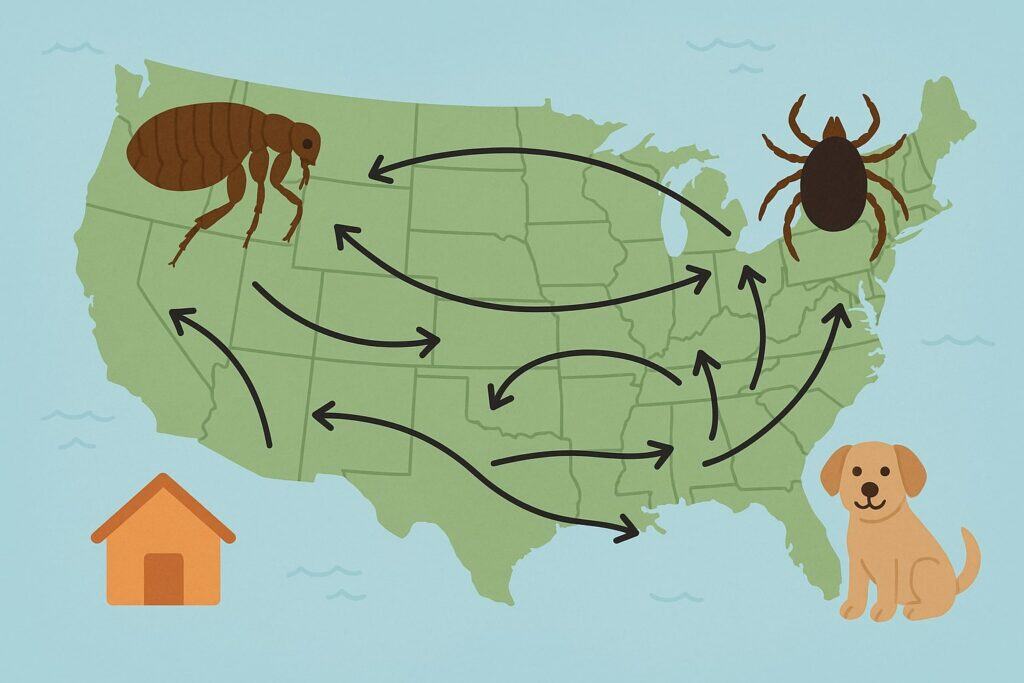
A big part of how to prevent fleas and ticks is understanding how they move through your environment. Fleas usually enter your home on a pet or wildlife (stray cats, rodents, raccoons, opossums). Flea eggs shed into carpets, sofa seams, pet beds, car upholstery, and yard debris.
The life cycle includes eggs, larvae, pupae, and adults. Some stages, especially pupae in cocoons, can survive for weeks or months waiting for the right conditions, which is why infestations can seem to “explode” after a warm spell or when you return from vacation.
Ticks spread differently. They don’t infest your home in the same way, but your yard and nearby green spaces can become heavily “seeded” with ticks carried by deer, mice, birds, and other wildlife. In the US, blacklegged ticks (deer ticks), American dog ticks, Lone Star ticks, and others are common, and their ranges are expanding north and west.
Ticks wait on vegetation and attach to pets or people brushing by. When you focus on how to prevent fleas and ticks, it’s critical to think about wooded edges, tall grasses, leaf litter, and fence lines where wildlife travel.
Within the US, regional risk varies:
- Northeast & Upper Midwest: Very high tick-borne disease risk (especially Lyme). Fleas are common on pets year-round indoors.
- Southeast & Gulf Coast: Warm and humid climate supports heavy flea populations, plus multiple tick species active most of the year.
- West Coast & Pacific Northwest: Variable, but some pockets have significant tick risk in wooded or brushy areas, and fleas thrive in coastal, mild climates.
- Southwest & Mountain West: Drier climates may reduce flea burdens outdoors but don’t eliminate risk; certain regions still have meaningful tick populations and flea-borne diseases.
Because indoor heating and close contact with pets allow fleas to survive and breed even in winter, many veterinary experts now say that how to prevent fleas and ticks in the US should assume 12-month protection, not just summer coverage.
Core Principles of How to Prevent Fleas and Ticks
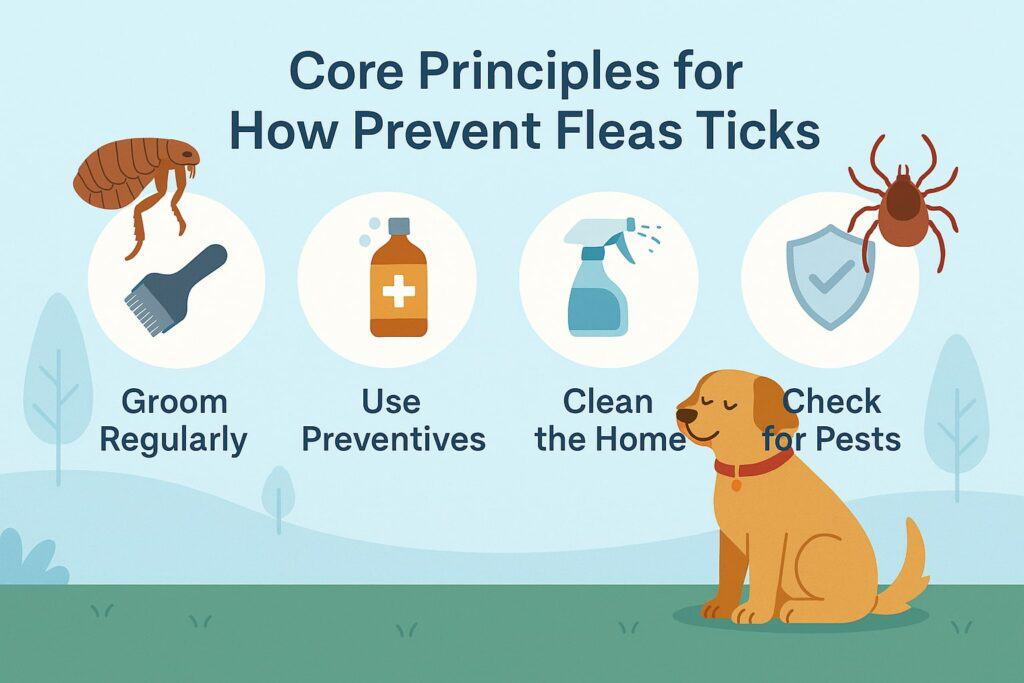
If you remember only a few core ideas about how to prevent fleas and ticks, focus on these:
- Year-round prevention for pets. Modern guidelines from CAPC and AAHA recommend continuous, year-round parasite prevention for dogs and cats, rather than seasonal treatment. This includes broad-spectrum medications that target heartworms, intestinal parasites, fleas, and ticks.
- Layered protection (integrated pest management). Flea and tick control works best when you combine strategies: vet-prescribed preventives on pets, regular grooming and checks, home and yard management, and human protection like repellents and tick checks.
Treating one layer but ignoring others makes it much harder to truly figure out how to prevent fleas and ticks in your daily life. - Work with a veterinarian. There is no single “best” product for every pet. Your vet considers your pet’s species, weight, age, health, environment, and other medications before recommending topical products, oral tablets, collars, or injections.
The AVMA specifically encourages pet owners to partner with vets when selecting external parasite control. - Follow product labels exactly. The US EPA and FDA regulate many flea and tick products to ensure that, when used correctly, benefits outweigh risks. Misuse—wrong species, wrong dose, combining multiple products—can cause side effects or even be fatal, especially to cats.
- Think long-term and regional. Because climate change is lengthening parasite seasons, how to prevent fleas and ticks must adapt. In many US states, veterinarians already recommend considering tick prevention as a 12-month requirement, not a seasonal add-on.
If you build your plan around these principles—year-round protection, layered defenses, professional guidance, and careful label use—you’ll be far ahead in mastering how to prevent fleas and ticks in a practical, sustainable way.
Preventing Fleas and Ticks on Dogs and Cats
Veterinary-Approved Preventive Medications
For most US households with pets, the foundation of how to prevent fleas and ticks is a monthly (or longer-acting) veterinary preventive. These products may be:
- Topical spot-ons applied to the skin between the shoulder blades or along the back.
- Oral tablets/chews given monthly or every 1–3 months that circulate in the bloodstream and kill fleas and ticks when they bite.
- Collars that slowly release insecticidal ingredients onto the pet’s skin and coat over months.
- Injectables in some cases (e.g., certain long-acting flea products).
The Companion Animal Parasite Council and AAHA recommend year-round use of appropriate preventives, especially in the US where many regions have mild winters and indoor heating.
When you talk to your vet about how to prevent fleas and ticks, discuss:
- Your pet’s lifestyle (indoor vs. outdoor, hiking, dog park use).
- Any history of seizures, liver or kidney disease, pregnancy, or drug sensitivities.
- Whether you have cats and dogs together (some dog products are deadly to cats).
Your vet may choose products that also protect against heartworm and intestinal parasites, simplifying how to prevent fleas and ticks as part of a broader parasite-control program. Testing for heartworm and tick-borne infections yearly is also recommended in many guidelines.
Over the next decade, expect more long-acting oral and injectable options, plus “combination” products that cover an even wider range of parasites with fewer doses. Precision dosing tailored to genetics or microbiome is being researched, which may refine how to prevent fleas and ticks even further.
Safe Use of Topical, Oral, and Collar Products
Learning how to prevent fleas and ticks isn’t just about choosing a product—it’s about using it safely. The FDA and EPA both warn that misuse is a major driver of side effects, especially in cats and smaller dogs.
Key safety steps:
- Use species-specific products. Never use dog flea and tick medicine on cats. Some dog products contain pyrethroids that are harmless to dogs but can cause tremors, seizures, or death in cats.
- Dose by accurate weight. Weigh your pet before starting a new product. Don’t split one large-dog dose between two smaller dogs unless the label explicitly allows it.
- Don’t layer multiple similar products (e.g., two topicals from different brands) unless your vet directs it. Combining active ingredients can increase toxicity.
- Monitor after the first dose. The FDA advises watching for vomiting, diarrhea, wobbly walking, tremors, unusual behavior, or skin irritation. If you see concerning signs, contact your vet immediately and report reactions as directed.
- Follow bathing guidance. Many topicals need 48 hours before and after application without a bath to maintain effectiveness. Some modern products tolerate bathing better, but check the label.
EPA continues to update labels and review active ingredients in flea and tick products at least every 15 years, adjusting warnings or usage instructions when needed. As environmental and safety data grow, you can expect more precise guidance on how to prevent fleas and ticks while minimizing risks to pets, people, and ecosystems.
Grooming, Bathing, and Daily Checks
Medication isn’t the only answer for how to prevent fleas and ticks. Grooming is a powerful, low-tech tool. Regular brushing allows you to spot fleas, flea dirt (black specks), or ticks early. For dogs and cats that tolerate handling, daily or every-other-day brushing during peak seasons is ideal.
Use a fine-toothed flea comb around the neck, base of the tail, groin, and under the “armpits.” Dip the comb into soapy water to kill any fleas you catch. This simple routine is a cornerstone of how to prevent fleas and ticks without relying solely on chemicals.
Bathing with a gentle pet shampoo helps remove dirt, allergens, and occasional parasites. Medicated flea shampoos can knock down heavy infestations but often have limited residual effect; they should be part of a broader plan, not the only step in how to prevent fleas and ticks. Always avoid human shampoos and unproven essential oils, which may irritate or poison pets.
For ticks, daily full-body checks after time outdoors are vital:
- Feel along the ears, around the eyes, under the collar, in the groin, between toes, and under the tail.
- Remove ticks promptly with a tick key or fine tweezers, grasping close to the skin and pulling steadily. Don’t twist, crush, or burn the tick.
Over time, pets get used to these routines. When people ask how to prevent fleas and ticks in a gentle way, frequent grooming and checks are one of the most effective, low-risk answers.
Special Considerations for Puppies, Kittens, and Senior Pets
“How to prevent fleas and ticks on puppies and kittens” is a bit more complicated because young animals are more sensitive to medications and more vulnerable to blood loss. Fleas can cause life-threatening anemia in small puppies and kittens, and some products are only labeled for use above a certain age or weight.
For young animals:
- Always consult a vet first. Don’t use over-the-counter spot-ons without checking the minimum age and weight.
- Use gentle mechanical methods like flea combing and frequent bedding washing while your vet selects safe medications.
- Monitor closely for lethargy, pale gums, poor appetite, or rapid breathing, which may signal severe flea-related anemia or disease.
Senior pets and those with chronic illness also need personalized advice on how to prevent fleas and ticks. Certain oral products may not be ideal for pets with seizure disorders or organ disease. Your vet might recommend:
- Lower-risk topicals or collars.
- Adjusted dosing intervals.
- More frequent health checks to catch side effects early.
As medicine advances, we’re likely to see more age-specific and disease-specific recommendations for how to prevent fleas and ticks safely, including blood tests or genetic markers that predict which pets are at higher risk of adverse effects.
How to Prevent Fleas and Ticks in Your Home
Cleaning, Laundry, and Vacuuming Routine
If you’re serious about how to prevent fleas and ticks from taking over your home, your vacuum and washing machine are your best friends. Flea eggs and larvae hide in carpets, rugs, furniture, and cracks in the floor. They’re surprisingly resistant to spot treatments and can re-infest your pets if you only treat the animal.
Key home steps:
- Vacuum floors, carpets, rugs, and upholstered furniture at least weekly, and more often during or after an infestation. Focus on pet sleeping areas and baseboards. Immediately empty the vacuum into a sealed bag and discard outdoors.
- Wash pet bedding, throw blankets, and frequently-used textiles weekly in hot water and dry on high heat. The CDC recommends ongoing sanitation to break the life cycle when getting rid of fleas.
- Steam cleaning can help kill larvae and eggs embedded in carpets and furniture.
- Declutter so there are fewer dark, undisturbed areas for larvae to develop.
When you ask how to prevent fleas and ticks indoors, think in terms of making the environment less friendly to eggs and larvae: clean, bright, dry, and frequently disturbed.
Even if you use chemical treatments, this cleaning routine remains essential and is one of the most important long-term answers to how to prevent fleas and ticks in your house.
Treating Indoor Environments Safely
Sometimes cleaning isn’t enough, especially if you’re already dealing with a heavy infestation. In those cases, people often look for ways to prevent fleas and ticks using sprays, foggers, or professional pest control. The CDC notes that fleas in certain life stages are resistant to some insecticides, which is why repeated treatments are necessary.
Best practices:
- Targeted sprays over foggers. Modern integrated pest management tends to favor spot treatments with insect growth regulators (IGRs) and insecticides over old-style “bug bombs.” Foggers are often less effective and carry higher inhalation risks.
- Follow label directions carefully. The EPA emphasizes that misuse of pesticides in homes can put children and pets at risk. Remove animals, cover food and dishes, and ventilate thoroughly before re-entry.
- Coordinate with your vet. If you’re using pet flea and tick products plus household insecticides, ask your veterinarian and pest professional how to prevent fleas and ticks without overexposing your pets to chemicals.
- Consider professional pest control for severe or recurring infestations. Professionals can use integrated strategies and safer application techniques, especially important in homes with young children, elderly residents, or respiratory issues.
As regulators and scientists learn more about environmental contamination from flea and tick chemicals, we may see more specific guidance on how to prevent fleas and ticks indoors using products with lower ecological impact and narrower targets.
Dealing with Existing Infestations Step-by-Step
If you’re already infested, how to prevent fleas and ticks becomes a two-phase process: eliminate what’s there and prevent their return. Because flea populations include eggs, larvae, pupae, and adults, you need at least several weeks of coordinated effort.
A simple plan:
- Put all pets on appropriate preventives immediately under veterinary supervision.
- Intensify cleaning: daily vacuuming in heavily used areas, hot washing of bedding every few days.
- Use recommended indoor treatments, ideally ones containing an IGR to stop eggs from maturing.
- Repeat treatments as directed, usually 5–10 days apart to catch emerging adults, as the CDC notes.
- Continue prevention after the infestation clears. Stopping treatment as soon as you see fewer fleas is one of the fastest ways to end up asking again how to prevent fleas and ticks a few months later.
Ticks indoors are less common but can still hitchhike in. Vacuum thoroughly, check baseboards and bedding, and launder textiles. Focus more on pet treatment and yard management, since ticks prefer outdoor environments.
How to Prevent Fleas and Ticks in Your Yard and Outdoor Spaces
Landscaping Strategies to Reduce Flea and Tick Habitats
Your yard is often the missing link in how to prevent fleas and ticks. Both parasites love shady, humid environments with organic debris. CAPC and other expert groups recommend habitat management as an important non-chemical strategy.
Smart landscaping practices:
- Keep grass mowed and shrubs trimmed, especially along walkways and play areas.
- Remove leaf litter and brush piles, particularly at the edges of the yard near woods or fences.
- Create a “tick-safe zone”: a 3-foot barrier of wood chips or gravel between wooded areas and lawns or play spaces, as suggested by public health agencies.
- Store firewood neatly and off the ground to discourage rodents and small mammals that carry fleas and ticks.
- Limit groundcover plants where pets and kids play, since dense low vegetation is tick heaven.
If you have a fenced yard, preventing stray animals from visiting is another underappreciated part of how to prevent fleas and ticks in outdoor spaces. Wildlife-friendly but controlled fencing, and not leaving pet food outdoors, can reduce activity from raccoons, stray cats, and opossums.
Over time, combining these landscaping strategies with pet preventives drastically cuts your risk and gives you a more sustainable, low-chemical foundation for how to prevent fleas and ticks outside your home.
Wildlife, Rodent Control, and Integrated Pest Management
Ticks and fleas don’t appear out of nowhere; most ride into your yard on wildlife or rodents. Integrated pest management (IPM) asks you to think about the entire ecosystem when planning how to prevent fleas and ticks.
Key components:
- Discourage rodents and wildlife by securing trash, removing fallen fruit, and not feeding feral animals.
- Use rodent-proof storage for birdseed and pet food.
- Consider tick tubes or bait boxes in high-risk Lyme areas, which treat rodents with permethrin-treated cotton or other methods to reduce tick burdens on mice. Follow local regulations and expert guidance if you use these.
- Collaborate with neighbors and HOAs where possible; ticks and fleas cross property lines freely.
As communities become more aware of vector-borne disease, neighborhood-level discussions about how to prevent fleas and ticks—including habitat management and maybe coordinated IPM programs—are likely to grow. This community approach can be far more effective than isolated, one-yard efforts.
Environmentally Conscious Yard Treatments
A hot topic in 2024–2025 is how to prevent fleas and ticks while protecting the environment. Studies in the UK and Europe have found insecticides from pet treatments—including imidacloprid and fipronil—in rivers, estuaries, and even songbird nests, raising concerns about aquatic life and bird populations.
What this means for you in the US:
- Use only what you truly need. Instead of routine, blanket yard spraying, consider targeted treatments in known high-risk areas where pets and people actually move.
- Avoid spraying near waterways, storm drains, or pollinator habitats like flowering plants.
- Work with licensed pest professionals who understand local ecology and regulations and can design a minimal-impact plan for how to prevent fleas and ticks in your yard.
- Focus on non-chemical steps first (mowing, leaf removal, barriers) before resorting to broad insecticide use.
In the coming years, expect stricter environmental risk assessments and potentially tighter regulations around some active ingredients used in flea and tick treatments, especially those affecting waterways and wildlife. This will likely shape future recommendations on how to prevent fleas and ticks while protecting ecosystems.
Protecting People: How to Prevent Flea and Tick Bites on Your Family
Before You Go Outdoors: Clothing and Repellents
When you plan outdoor activities in tick-heavy areas, knowing how to prevent fleas and ticks from biting you is as important as protecting your pets. The CDC emphasizes reducing exposure to ticks as your best defense.
Before going out:
- Know where ticks live—wooded areas, brush, tall grass, and leaf litter.
- Wear protective clothing: long sleeves, long pants tucked into socks, and closed-toe shoes. Light-colored clothing makes it easier to spot ticks.
- Use EPA-registered repellents containing DEET, picaridin, IR3535, oil of lemon eucalyptus (OLE), or 2-undecanone on exposed skin, following label instructions.
- Treat clothing and gear with permethrin or buy pre-treated items for extra protection.
When you focus on how to prevent fleas and ticks for your children, choose child-appropriate repellent concentrations and follow pediatric recommendations. Always apply repellent to your own hands first, then to the child, and avoid hands, eyes, and mouth.
Fleas are usually a lesser direct risk to people outdoors compared with ticks, but in some regions with flea-borne typhus or plague reservoirs, public health agencies may issue specific warnings.
In those situations, knowing how to prevent fleas and ticks also includes avoiding sleeping on the ground or handling wildlife and promptly reporting unusual rodent die-offs.
After-Activity Checks and Tick Removal
Even with perfect preparation, some ticks slip through. That’s why CDC guidance on how to prevent fleas and ticks always stresses tick checks and prompt removal after you come back indoors.
Within two hours of being outdoors:
- Shower to help wash off unattached ticks and make it easier to spot them.
- Conduct a full-body tick check in bright light or using a mirror. Pay special attention to:
- Behind knees
- In and around ears
- Underarms
- Around the waist and belly button
- In hair and along the hairline
- Groin area
- Behind knees
If you find a tick:
- Use fine-tipped tweezers to grasp it as close to the skin as possible.
- Pull upward with steady, even pressure—don’t twist, jerk, or crush the tick.
- Clean the bite area and your hands with rubbing alcohol or soap and water.
- Note the date and watch for rash, fever, or flu-like symptoms in the coming days.
For fleas, after-activity checks are less structured, but if you’re dealing with an active infestation in your home or region, changing clothes, showering, and not sitting on beds or fabric furniture until you’ve done so can reduce spread.
If you combine these practices with pet prevention, yard management, and home cleaning, your human-focused strategy for how to prevent fleas and ticks becomes strong and reliable.
Regional and Seasonal Tips for the United States
“How to prevent fleas and ticks in the US” looks slightly different from region to region, but patterns are emerging as climate shifts. Public health and veterinary groups increasingly emphasize that parasite risk maps are changing and seasonal boundaries are blurring.
Northeast and Upper Midwest:
- Very high incidence of Lyme and other tick-borne diseases.
- Tick activity peaks from late spring to early fall, but mild winters mean ticks can be active whenever temperatures are above freezing.
- Strongly consider year-round tick prevention for pets and strict human tick precautions for hikers, hunters, and gardeners.
Southeast, Mid-Atlantic, and Gulf Coast:
- Warm, humid climate supports massive flea populations and multiple tick species.
- Heartworm is also a major concern for dogs and cats.
- Here, how to prevent fleas and ticks almost always includes broad-spectrum year-round preventives, rigorous home cleaning, and yard management.
West Coast and Pacific Northwest:
- Microclimates matter: coastal and wooded areas may be high-risk, while urban cores are somewhat lower risk.
- Blacklegged ticks and others can be active year-round in mild coastal climates.
Southwest and Mountain West:
- Lower humidity reduces flea numbers outdoors but doesn’t eliminate them; indoor infestations can be severe.
- Certain mountain and high-desert areas have notable tick populations; check local health department advisories.
Across the US, many veterinarians have shifted from seasonal “summer only” recommendations to 12-month prevention and annual testing, reflecting updated answers to how to prevent fleas and ticks as our environment changes.
Common Mistakes to Avoid When Preventing Fleas and Ticks
Even well-intentioned pet owners make mistakes that undermine how to prevent fleas and ticks effectively. Avoid these big ones:
- Stopping prevention in winter. Indoor heating and warmer winters mean fleas can thrive and ticks can stay active during “off-season” months.
- Using dog products on cats. This can be deadly due to certain insecticides that cats cannot metabolize safely.
- Relying only on shampoos or natural remedies. Flea baths give temporary relief but don’t provide lasting protection. Many essential oils touted online as “how to prevent fleas and ticks naturally” are ineffective or toxic to pets.
- Not treating all pets in the household. If one dog or cat is on prevention and others are not, fleas will continue to circulate.
- Ignoring the environment. Treating the pet but not cleaning the home or managing the yard leaves you stuck in a cycle of reinfestation.
- Overusing chemicals without a plan. More is not always better. Layering multiple insecticides without veterinary guidance can harm pets and the environment.
When you ask a vet or pest professional how to prevent fleas and ticks, they’ll almost always stress consistency, proper product selection, and integrated strategies—not quick, one-time fixes.
The Future of Flea and Tick Prevention
Over the next 5–15 years, the conversation about how to prevent fleas and ticks is likely to evolve in several important ways:
- More advanced preventives. Newer oral and injectable products with longer duration and more precise targeting of parasite nervous systems are already in development. These may reduce dosing frequency and improve compliance.
- Better diagnostics and risk mapping. Organizations like CAPC already publish parasite prevalence maps. As data becomes more granular, pet owners may receive highly localized guidance on how to prevent fleas and ticks based on neighborhood-level risk and climate projections.
- Vaccines and novel technologies. Tick vaccines for dogs exist in limited forms for certain species and more are being researched. Future vaccines might prevent ticks from feeding or block transmission of key pathogens, reshaping how to prevent fleas and ticks and their diseases.
- Environmental regulation and “greener” options. With growing evidence of pesticide residues from pet treatments in waterways and wildlife, regulators may tighten rules on some active ingredients, pushing innovation toward more eco-friendly molecules, delivery systems, and risk-based treatment strategies.
- Personalized preventive plans. As veterinary care becomes more data-driven, expect more individualized protocols for how to prevent fleas and ticks, taking into account species, lifestyle, health status, genetic factors, and local ecology instead of one-size-fits-all advice.
What won’t change is the core truth: prevention will remain far cheaper, safer, and easier than treating full-blown infestations or serious tick-borne illnesses.
FAQs
Q1. Do I really need flea and tick prevention all year long?
Answer: In many parts of the US, yes, year-round prevention is now recommended as the standard answer to how to prevent fleas and ticks. Indoor heating, urban wildlife, and milder winters allow fleas and some tick species to stay active beyond traditional “summer” seasons.
CAPC and AAHA both promote 12-month parasite control for dogs and cats, including heartworm, intestinal parasites, fleas, and ticks.
Even in colder states, it’s common to see winter days warm enough for ticks to be active. Also, once fleas are indoors, they don’t care what’s happening outside. Because the cost of prevention is relatively steady and the cost of treatment can be high, year-round coverage makes economic and medical sense.
If you live in a very cold, dry region and your pets are strictly indoors, ask your veterinarian how to prevent fleas and ticks based on your exact risk level. But for much of the US, stopping preventives in winter is considered outdated and risky.
Q2. Are over-the-counter flea and tick products safe?
Answer: Many over-the-counter (OTC) products are safe when used correctly, but safety depends on the active ingredients, species, dose, and your pet’s health. The FDA and EPA both regulate flea and tick preventives, but they have repeatedly reminded owners that misuse is a major cause of adverse events.
Key safety rules if you’re using OTC options as part of how to prevent fleas and ticks:
- Only buy products labeled for your pet’s species and weight.
- Never use dog products on cats.
- Don’t mix different flea and tick products unless your vet specifically instructs you to.
- Monitor your pet closely after the first application for vomiting, tremors, skin irritation, or behavior changes.
Because the product marketplace is crowded and marketing can be confusing, most veterinarians now recommend that discussions about how to prevent fleas and ticks start with them. Many vet-approved products are now available online with prescriptions, making it easier to follow professional guidance without overpaying.
Q3. What is the safest way to remove a tick from my pet or child?
Answer: The safest, evidence-based method recommended by CDC and veterinary authorities is simple and mechanical.
To remove a tick:
- Use fine-tipped tweezers or a tick removal tool.
- Grasp the tick as close to the skin as possible, aiming at the mouthparts, not the swollen body.
- Pull upward with steady, even pressure—no twisting, crushing, or burning.
- Clean the bite area and your hands with rubbing alcohol or soap and water.
- Dispose of the tick in alcohol or sealed plastic; don’t crush it with your fingers.
Old tricks like nail polish, petroleum jelly, or burning the tick are not recommended and can increase the chance of disease transmission.
As part of how to prevent fleas and ticks, keep removal tools in your first aid kit, your car, and your hiking bag so you can act quickly if you find a tick on your pet or child.
Q4. Are “natural” or essential-oil flea and tick remedies a good idea?
Answer: Many people searching for how to prevent fleas and ticks naturally hope to avoid chemicals, but the reality is complicated. Some plant-derived ingredients are used in EPA-registered repellents, but many essential oils marketed online for pets are unregulated, untested, and sometimes toxic to animals.
Common issues:
- Essential oils can cause skin burns, drooling, vomiting, or neurologic signs in pets.
- Many products lack proper dosing or safety data for cats, which are especially sensitive.
- “Natural” does not mean safe, effective, or appropriate for how to prevent fleas and ticks in real-world conditions.
Non-chemical methods like frequent vacuuming, washing bedding, using flea combs, and yard cleanup are genuinely helpful, low-risk tools. But when disease risk is high, veterinarians generally recommend proven, regulated pharmaceuticals as the backbone of how to prevent fleas and ticks, sometimes supplemented with carefully chosen, evidence-based repellents.
Q5. How long does it take to get rid of a flea infestation?
Answer: Even when you follow best practices for how to prevent fleas and ticks, a flea infestation can take several weeks to fully resolve because of the flea life cycle. Eggs, larvae, pupae, and adults don’t all die at once.
The CDC notes that at some stages, fleas are resistant to insecticides and other control products, requiring repeat treatments 5–10 days apart and ongoing sanitation.
A realistic timeline:
- Week 1: Start pet preventives, deep clean the home, and possibly treat the environment. You may still see adult fleas jumping as larvae mature.
- Weeks 2–4: Continue vacuuming and washing. New adults emerge, but numbers should gradually decline as they die before reproducing.
- Weeks 4–8: With consistent prevention and cleaning, you should see very few or no fleas.
If you still have a heavy infestation after 6–8 weeks, it’s time to revisit your plan for how to prevent fleas and ticks with your veterinarian and possibly a pest professional—there may be hidden reservoirs or treatment gaps.
Q6. Can fleas and ticks live on humans long term?
Answer: Fleas and ticks prefer animal hosts, but humans can be bitten and temporarily parasitized. In the US:
- Fleas may bite humans, especially around ankles and legs, but they usually don’t live and reproduce on people the way they do on pets.
- Ticks can attach to people for several days, feeding and potentially transmitting disease, but they don’t live permanently on humans.
So, when you think about how to prevent fleas and ticks in your family, most of the long-term strategy focuses on:
- Keeping pets free of fleas and ticks.
- Managing the home and yard environment.
- Using repellents and tick checks on people.
If you’re experiencing frequent bites indoors, that’s a sign you need to strengthen your overall plan for how to prevent fleas and ticks in pets and the home environment, rather than focusing only on the human side.
Conclusion
By now, you’ve seen that how to prevent fleas and ticks isn’t about a single magic product. It’s a layered, long-term strategy that combines:
- Year-round, vet-guided preventive medications for dogs and cats.
- Daily or frequent grooming, flea combing, and full-body tick checks.
- Consistent cleaning and laundry routines inside your home.
- Smart yard and habitat management plus thoughtful, minimal-impact use of insecticides.
- Personal protection for your family through clothing, repellents, and post-activity checks.
As climate change and environmental concerns reshape the landscape, the science of how to prevent fleas and ticks will keep evolving. Expect richer data, more precise medications, and stronger emphasis on environmental stewardship.
But the central message will stay the same: prevention is easier, safer, and kinder—to your pets, your family, and the planet—than dealing with full-blown infestations or serious tick-borne diseases.
If you’re in the US and wondering exactly how to prevent fleas and ticks in your situation, your best next step is to talk with a local veterinarian. Bring up your pets’ lifestyle, your yard, and any health concerns, and work together on a personalized, year-round plan.
That partnership, backed by the latest science, is the most reliable way to stay ahead of fleas and ticks now and in the future.