
Veterinary Rehabilitation Services and Veterinary Physiotherapy: Post-Op Care Profit Centers
Post-operative recovery is no longer seen as the quiet stretch between surgery and discharge. For many veterinary teams, it has become one of the most important phases of care because what happens after a procedure often shapes comfort, mobility, function, owner satisfaction, and the overall success of treatment. A technically strong surgery matters, but recovery quality often determines how well that result holds up in real life.
That is where veterinary rehabilitation services and veterinary physiotherapy are gaining attention. When used appropriately, they help clinics support safer healing, better movement, more consistent monitoring, and stronger client follow-through.
They also give practices a structured way to stay involved after surgery rather than leaving owners with only a printed discharge sheet and a recheck date.
For clinic owners and practice managers, this shift has another important implication. Post-op support does not have to be viewed only as a cost center. When thoughtfully designed around patient need, rehab services in veterinary clinics can become a meaningful and sustainable service line.
A well-run program can generate revenue through consultations, guided therapy sessions, rechecks, home exercise support, mobility plans, and adjunctive modalities, while also improving continuity of care and client trust.
The key is balance. A successful program is not built by selling sessions for the sake of sales. It is built by identifying the right cases, setting realistic goals, documenting progress, training the team, and making post-surgical pet rehabilitation part of a patient-first workflow.
When that happens, veterinary rehabilitation services and veterinary physiotherapy can support better outcomes and create a stronger post-op business model at the same time.
What Veterinary Rehabilitation Services and Veterinary Physiotherapy Include in Clinical Practice
In a clinical setting, veterinary rehabilitation services involve far more than basic exercise after surgery. They are structured, medically supervised plans designed to support healing, restore function, reduce discomfort, improve strength, and help patients return to daily activity as safely as possible.
Veterinary physiotherapy sits within that broader framework and focuses on movement, soft tissue support, therapeutic exercise, mobility work, gait improvement, and physical recovery strategies tailored to the individual patient.
These services are often most visible after surgery, but they can also be used in chronic pain cases, neurologic conditions, degenerative mobility problems, sports injuries, and long-term wellness and recovery support. In the post-op setting, their value comes from turning recovery into an active process rather than a passive waiting period.
A veterinary rehab plan may include:
- Initial rehab consultation and movement assessment
- Pain and function monitoring
- Passive range-of-motion work
- Assisted standing or supported walking
- Therapeutic exercises for balance, strength, and coordination
- Gait re-education
- Weight-bearing support
- Manual therapy where appropriate
- Laser therapy or other adjunctive modalities
- Underwater treadmill work in selected cases
- Home exercise instruction for owners
- Scheduled progress rechecks and plan adjustments
The exact mix depends on the surgery, the patient’s age, body condition, temperament, home environment, and medical history. A large-breed orthopedic patient recovering from cruciate repair will not need the same plan as a senior cat after soft tissue surgery or a neurologic patient relearning controlled movement.
That individualization is what makes veterinary physiotherapy clinically valuable. It is not a one-size-fits-all package. The therapy plan should reflect what healing tissues can tolerate, what the surgeon wants protected, and what goals matter most in the next stage of recovery.
Core Components of a Post-Op Rehabilitation Plan
A strong post-op rehabilitation plan usually starts with assessment, not treatment. The team needs to understand the patient’s baseline comfort, limb use, gait quality, ability to rise, willingness to bear weight, muscle symmetry, incision status, and owner capacity for home care.
Without that baseline, it becomes much harder to show progress or decide when a patient needs a different approach.
From there, the plan should break recovery into manageable stages. Early care may focus on protection, comfort, controlled movement, and gentle support. Mid-stage care often shifts toward improved weight-bearing, strength rebuilding, mobility therapy, and functional activity.
Later stages may include endurance work, coordination tasks, and return-to-activity planning. Each stage should have documented goals, precautions, and a communication plan for the owner.
The home component matters just as much as in-clinic therapy. Many rehabilitation plans for pets after surgery succeed because the clinic gives owners a clear routine they can realistically follow.
That may mean short leash walks, sit-to-stand repetitions, weight-shifting exercises, environmental adjustments, and checklists for monitoring comfort and mobility at home.
This structure benefits both medicine and management. Clinically, it reduces guesswork. Operationally, it creates a repeatable service framework that staff can explain, schedule, document, and price consistently.
That is one reason animal physical therapy services can work well as a service line in practice settings that already perform orthopedic, neurologic, or mobility-focused care.
How Veterinary Physiotherapy Differs From General Post-Discharge Instructions
Standard discharge instructions are necessary, but they are not the same as a rehabilitation program. Traditional discharge guidance often includes medication schedules, activity restriction, incision monitoring, and a recheck appointment. That information is essential, yet it usually does not provide active recovery support beyond general precautions.
Veterinary physiotherapy adds a guided, responsive layer to recovery. Instead of telling owners to limit activity and wait, it gives them a structured plan for what safe progress looks like.
It also creates regular checkpoints where the team can spot problems earlier, such as asymmetrical limb use, delayed weight-bearing, muscle loss, owner noncompliance, or pain patterns that are slowing recovery.
This difference matters because many post-op setbacks are not dramatic emergencies. They are gradual losses in function, confidence, or consistency.
A patient may technically heal, but still return to life with poor movement quality, weakness, guarded limb use, or avoidable deconditioning. Veterinary post-op recovery services can help reduce that gap between healing on paper and functioning well at home.
From a business standpoint, this is also where practices find value. Clients are often willing to invest in help that feels specific, measurable, and relevant to their pet’s comfort and mobility.
A physiotherapy-guided recovery plan is easier to understand and appreciate than vague instructions to “take it easy for a few weeks.” When owners can see goals, progress, and professional oversight, compliance and follow-up engagement often improve as well.
Common Post-Surgical Cases That Benefit From Rehab and Mobility Support
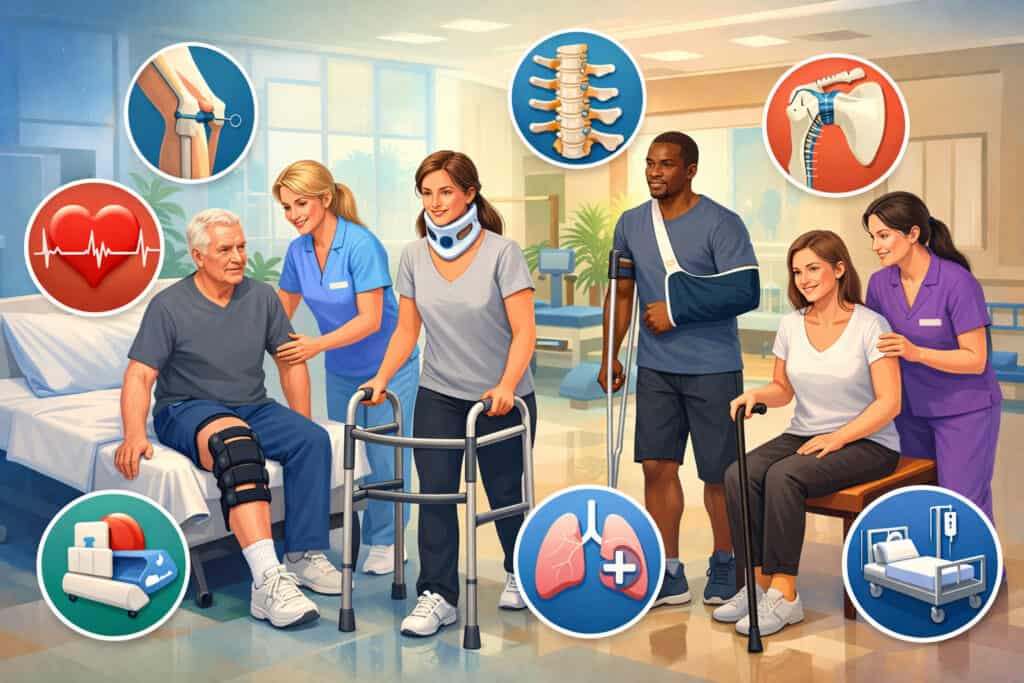
Not every patient needs formal rehabilitation, but many surgical cases can benefit from some level of structured recovery support.
Clinics that want to build a veterinary rehab profit center should start by identifying which procedures already generate the strongest need for follow-up care. In many hospitals, that need already exists; it just has not yet been organized into a service line.
Orthopedic surgery is often the most obvious entry point. Cruciate repairs, fracture management, femoral head procedures, patellar stabilization, spinal surgery, and complex joint cases frequently involve reduced mobility, muscle loss, altered gait, and a need for progressive exercise.
These patients often benefit from closely monitored recovery plans that restore strength and function over time.
Neurologic cases can also be strong candidates. Patients recovering from spinal procedures, nerve injuries, or paresis-related issues may need assisted movement, balance training, gait work, and careful progression based on neurologic status.
These cases typically require patience, documentation, and strong owner coaching, all of which fit well within veterinary rehabilitation services.
Soft tissue cases may need a more selective approach, but they should not be overlooked. Major abdominal surgery, thoracic procedures, wound reconstruction, and prolonged hospitalization can leave patients weak, guarded, or reluctant to move normally.
Even when the primary goal is not athletic recovery, veterinary mobility therapy can help restore confidence, support safe movement, and reduce deconditioning.
Chronic pain and compensatory movement patterns also matter. Some pets enter surgery already weak, overweight, or functionally limited. Their recovery may stall if the clinic focuses only on incision healing and ignores broader mobility needs. In these patients, post-surgical pet rehabilitation can support a more complete return to daily life.
Orthopedic, Neurologic, and Soft Tissue Cases With High Rehab Potential
Orthopedic cases usually offer the clearest path for a rehab program because the goals are easy to explain and progress is often visible. Clients understand limping, weakness, stiffness, and difficulty rising.
That makes it easier to present a structured plan for post-operative care for pets after cruciate surgery, fracture repair, joint stabilization, or hip-related procedures. These patients often need progressive work on strength, range of motion, controlled activity, and symmetry.
Neurologic patients may be less predictable, but they often gain tremendous value from guided recovery. Assisted standing, supported stepping, coordination drills, and monitored weight-bearing can help preserve function while recovery unfolds.
These cases also create strong continuity of care because they usually need repeated reassessment and plan adjustments rather than one-time therapy advice.
Soft tissue procedures are sometimes underestimated from a rehab standpoint. A patient may be discharged as “doing fine,” yet still be moving poorly, showing shallow activity tolerance, or struggling with comfort during normal daily movements.
Controlled physical support, short recovery exercises, and follow-up mobility assessment can be helpful in selected cases, especially seniors or pets with pre-existing weakness.
Clinics do not have to treat every surgical patient as a rehab case. A better approach is to build criteria. Look for patients with expected mobility loss, extended restriction periods, delayed return to function, high owner motivation, body condition challenges, or previous orthopedic or neurologic compromise. That creates a more focused and ethical intake process for veterinary therapy services revenue.
Canine Rehabilitation Therapy and Feline Physiotherapy in Real-World Settings
Canine rehabilitation therapy is often the backbone of veterinary rehab programs because dogs present more frequently for orthopedic and mobility-related procedures, and many owners are receptive to active recovery plans.
Larger dogs, athletic dogs, senior dogs, and overweight dogs are especially strong candidates because post-op weakness and compensation can have major effects on daily function. Structured walking plans, underwater treadmill sessions, assisted sit-to-stand work, and balance exercises are commonly used when appropriate.
Feline physiotherapy deserves more attention than it often receives. Cats may not be as easy to schedule into repeated therapy visits, but they can still benefit from individualized recovery support. The approach usually needs to be more practical and less equipment-heavy.
Shorter sessions, low-stress handling, environmental modification, targeted movement encouragement, and owner coaching tend to matter more than lengthy in-clinic protocols.
For cats, post-op rehab may focus on safe movement around the home, jump restriction strategies, litter box access, pain-related mobility observation, and gradual reintroduction of function.
The challenge is often not whether rehab is useful, but whether the plan is realistic for feline behavior and household dynamics. Good feline physiotherapy respects those limits instead of copying a dog-centered model.
For both species, the clinic should match the care model to the patient and owner. Some pets will thrive with regular in-hospital sessions. Others will do best with a hybrid model that combines evaluation, rechecks, and home exercise support.
That flexibility helps rehab services in veterinary clinics remain patient-centered while broadening the number of cases the team can serve effectively.
Patient-Care Benefits of Post-Surgical Pet Rehabilitation
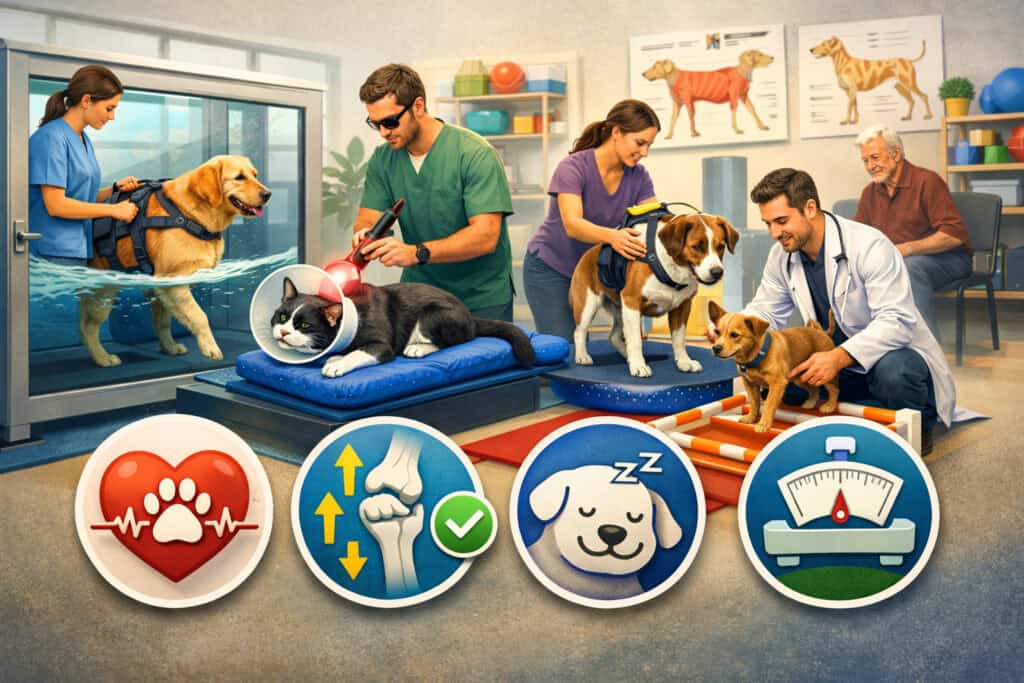
The strongest reason to invest in a rehab program is simple: many patients recover better with guided support than they do with rest alone.
Surgery solves one problem, but it can create or reveal others, including weakness, guarding, asymmetrical use, muscle loss, stiffness, and fear of movement. Post-surgical pet rehabilitation helps bridge the gap between the procedure itself and the pet’s real-world return to function.
One major benefit is pain control support. Rehab is not a substitute for medication, but it can complement the broader pain plan by improving comfort through controlled movement, reduced stiffness, and better use of the body. Patients that move more appropriately often show improved confidence and less compensatory strain.
Mobility improvement is another clear advantage. When patients are guided through safe, progressive activity, they are often less likely to stay stuck in poor movement patterns. That matters because even after tissues have healed, pets may continue to protect a limb or avoid full use if nobody helps them relearn normal motion.
Rehabilitation also supports muscle rebuilding and range-of-motion work. Restricted activity can quickly lead to weakness, especially in larger dogs or patients with long recovery timelines. Veterinary physiotherapy provides a way to rebuild in stages instead of allowing deconditioning to become the new normal.
There is also a monitoring advantage. Regular rehab touchpoints give the team more opportunities to assess progress, identify setbacks, reinforce owner instructions, and adjust the plan before problems become more expensive or harder to correct.
This is one reason veterinary post-op recovery services often improve the overall quality of case management, not just the therapy portion.
Pain Support, Strength Rebuilding, and Range-of-Motion Progression
Pain in post-op patients is not always obvious. Some animals become quiet, hesitant, or reluctant rather than overtly vocal. Others compensate so effectively that owners assume recovery is going well, even while the patient is moving poorly and building unhealthy patterns.
A structured rehab plan helps teams look beyond incision healing and ask whether the pet is actually comfortable using the body in a functional way.
Therapeutic movement can support comfort by reducing guarding and stiffness, provided the plan is appropriate for the stage of healing. Controlled motion, manual support, carefully selected exercises, and pacing guidance may all contribute to better day-to-day function.
That does not mean faster is always better. It means the right activity at the right time can help prevent the “too little, then too much” pattern many owners fall into.
Strength rebuilding is especially important after orthopedic procedures or prolonged crate rest. Muscle loss can occur quickly, and once it becomes significant, return to normal use can take longer and feel more frustrating to owners.
Veterinary mobility therapy gives teams a structured way to progress from support and stability toward active strengthening and functional activity.
Range of motion should also be addressed thoughtfully. Too little movement can leave a patient stiff and weak; too much, too soon can be harmful.
This is why individualized plans matter. The goal is not to push mobility aggressively, but to support healing tissues while maintaining as much healthy function as possible. That balance is where experienced rehab oversight adds real value.
Recovery Monitoring and Better Owner Compliance
One of the most overlooked benefits of rehab is that it gives clinics a reason to stay engaged after discharge. That consistent contact improves recovery monitoring and often improves owner behavior as well.
When owners know their pet will be reassessed regularly, they are more likely to stick to instructions and less likely to make impulsive decisions about activity.
Many post-op setbacks are compliance problems in disguise. Owners may allow too much freedom too early, skip exercises because they are unsure how to do them, or assume that one good day means recovery is complete.
Structured rehab reduces that ambiguity. It tells owners what to do, what not to do, what progress should look like, and when to call for help.
This improves the emotional side of recovery too. Surgery discharge can leave owners feeling nervous and underprepared. A rehab plan turns recovery into a guided process with support built in. That can reduce stress, increase trust, and make the clinic feel more invested in the whole outcome rather than just the procedure.
From the practice perspective, these repeated touchpoints strengthen follow-up engagement. The team is more likely to catch concerns early, reinforce medication and activity guidance, and identify when a patient needs a surgeon recheck, a modified plan, or additional pain support.
In this way, veterinary wellness and recovery services improve not only mobility outcomes, but also continuity, communication, and client satisfaction.
Why Rehab Can Become a Veterinary Rehab Profit Center Without Losing Clinical Integrity

There is a meaningful difference between monetizing recovery and improving it. The first tends to produce shallow, sales-driven programs. The second can create a genuinely valuable service line that also generates revenue.
Clinics that want rehab to work financially need to understand that veterinary rehabilitation services become a sustainable profit center when the service solves real problems, fits the patient journey, and is delivered consistently.
The business logic is straightforward. Surgery often creates a predictable recovery need. If the clinic already owns the case, performs the procedure, and manages the rechecks, it is in a strong position to extend care through post-op rehab rather than sending that need elsewhere or leaving it unstructured. This supports continuity of care while opening new, appropriate revenue streams.
Potential revenue sources may include:
- Rehab consultations
- Individual therapy sessions
- Session packages for defined recovery phases
- Recheck evaluations
- Laser therapy sessions
- Underwater treadmill appointments
- Technician-led exercise support where allowed and appropriate
- Home exercise plan coaching
- Chronic mobility maintenance programs
- Weight-support mobility plans
- Senior pet recovery and function programs
What makes this ethical is clear patient value. The clinic is not inventing a problem to sell a solution. It is addressing an existing need that many surgical patients already have. The revenue comes from better structure, better follow-up, better communication, and better recovery support.
This is why a veterinary rehab profit center should be framed as a patient-first care extension. When the program is built around outcomes, documentation, realistic goals, and good case selection, revenue becomes the result of helpful care rather than the purpose of the encounter.
Revenue Streams That Fit Naturally Into Post-Op Recovery Workflows
The most stable rehab revenue usually comes from services that align closely with the post-op timeline. An initial rehab consultation is often the first entry point. This visit can include baseline assessment, movement review, owner education, home setup guidance, and a phased plan. It sets expectations and gives the clinic a billable moment that clearly adds value.
From there, follow-up sessions can be structured based on case complexity. Some patients may need only a few guided visits with home support. Others may benefit from a short series of appointments over several weeks. Treatment packages can be useful when they are tied to a defined stage of recovery rather than sold as open-ended bundles.
Adjunctive modalities can also add revenue when appropriately selected. Laser therapy, underwater treadmill sessions, assisted mobility appointments, and targeted rechecks may each have a place. The key is to position them as tools within a plan, not stand-alone products pushed onto every patient.
Long-term mobility programs can further extend veterinary therapy services revenue beyond the immediate post-op window. Some pets transition from surgical recovery into chronic support for osteoarthritis, weight management, conditioning, or senior mobility. That can create recurring care relationships and deepen the clinic’s role in the patient’s long-term function.
The best workflow is usually simple. Surgery consult leads to procedure, procedure leads to discharge planning, discharge planning leads to rehab recommendation when appropriate, and rehab leads to measurable progress reviews. When this sequence is standardized, the program feels like part of care rather than an optional add-on nobody understands.
The Difference Between Patient-First Service Expansion and Pure Upselling
Clients can tell when a clinic is helping versus when it is merely selling. That distinction matters enormously in post-op care because owners are often vulnerable, worried, and trying to make the best decisions they can for their pets. If rehab is presented as a vague package with inflated promises, it can damage trust even if the service itself has value.
A patient-first rehab model starts by explaining why the individual pet may benefit. The recommendation should connect directly to the surgery, current function, home challenges, and realistic goals.
It should also explain what happens if the owner declines or chooses a lighter version of support. That kind of transparency makes the recommendation feel medical, not transactional.
Pure upselling tends to sound generic. It treats every surgical case as identical, pushes high-ticket services without clear rationale, and avoids discussing limitations.
It may emphasize revenue internally without building the training, documentation, or case review systems needed to support good outcomes. That approach usually fails because it produces weak compliance and inconsistent results.
A more credible model is to offer tiers of support. For example, one patient may need only rehab consultation plus home exercise follow-up. Another may need consultation, four guided sessions, and scheduled rechecks. A more complex orthopedic or neurologic patient may need a broader plan. Flexible care paths help clinics serve more cases responsibly.
For practice owners, this distinction is important. Programs built on patient value tend to generate steadier revenue over time because clients trust them. They also integrate better with referrals, surgeon communication, team morale, and long-term reputation.
Designing Service Packages, Pricing, and Revenue Opportunities That Make Sense
Rehab pricing should reflect time, expertise, equipment, staff involvement, and documented value. It should also be easy for clients to understand. Confusing menus, inconsistent charges, or improvised package recommendations make it harder for owners to commit and harder for the team to present the service confidently.
Many clinics do well with a simple ladder of services. Start with a rehab evaluation, then define the core recurring visit types, and then decide whether package pricing makes sense for common case categories.
For instance, a clinic might create structured offerings around early post-op support, progressive mobility therapy, and maintenance-based follow-up.
Packages can work well when they reduce decision fatigue and align with common recovery needs. A client facing several weeks of restricted activity often appreciates clarity. However, packages should still allow adjustment. Recovery is not linear, and the team needs flexibility to extend, reduce, or modify services based on actual progress.
Documentation matters here too. Owners are more likely to see value when each visit clearly records goals, findings, exercises performed, changes made, and next steps. That documentation supports billing, communication, and quality control. It also helps the clinic understand which services are working financially and clinically.
The pricing conversation becomes easier when the clinic connects it to outcomes that owners care about: helping the pet move more comfortably, protecting the surgical investment, monitoring progress, and avoiding setbacks that could slow healing or create more cost later.
Example Revenue Model for Veterinary Post-Op Recovery Services
The table below shows one practical way to think about common post-op rehab revenue opportunities. Actual pricing varies by market, case mix, and staffing model, but the structure illustrates how services can fit together without becoming overly complicated.
| Service Type | Clinical Purpose | Typical Timing | Operational Value | Revenue Opportunity |
| Rehab consultation | Baseline function assessment, recovery planning, owner education | Pre-op or early post-op | Sets case expectations and plan | Strong entry-point service |
| Guided therapy session | Mobility, strength, ROM, gait progression | Ongoing during recovery | Keeps patients engaged and scheduled | Recurring visit revenue |
| Recheck rehab evaluation | Progress review and plan adjustment | Every few visits or at milestones | Supports documentation and outcomes | Higher-value review visit |
| Home exercise support | Coaching, updates, compliance review | Between visits or follow-up | Improves adherence with low space demands | Efficient add-on or bundled value |
| Laser therapy | Adjunctive comfort and tissue support | Selected cases | Shorter appointment option | High-throughput ancillary service |
| Underwater treadmill | Controlled low-impact conditioning | Mid to later recovery in selected cases | Equipment-based premium service | Higher-fee modality |
| Long-term mobility program | Chronic support after surgical recovery | Maintenance phase | Extends case lifecycle | Recurring wellness-style revenue |
A model like this helps clinics think beyond single-session sales. It encourages a layered service line where some offerings drive entry, others drive continuity, and some support premium care for appropriately selected cases.
Building Packages Around Surgical Pathways Instead of Random Sessions
One of the best ways to improve both clinical consistency and financial performance is to build rehab offerings around common surgical pathways.
Instead of selling “five therapy sessions,” the clinic can present a recovery framework designed for a cruciate patient, a spinal surgery patient, or a fracture repair case. That makes the recommendation easier to understand and easier to justify.
For example, a cruciate pathway might include one rehab evaluation, three guided sessions over defined intervals, and one progress recheck. A neurologic pathway might involve more frequent reassessment and a heavier owner-coaching component. A lighter orthopedic pathway might emphasize home-based work supported by fewer in-hospital visits.
This structure also makes internal workflows easier. Front-desk staff can schedule more accurately, technicians know what visit lengths to expect, and doctors have a clearer model for presenting options. When pathways are standardized, the clinic can track utilization, conversion rates, compliance, and outcomes with more confidence.
This approach does not remove individualization. It simply provides a strong starting point. Within each pathway, the rehab plan still changes based on healing, mobility, tolerance, and owner participation. But the overall system becomes more scalable, which is important if the clinic wants post-op rehab to contribute meaningfully to practice revenue without creating chaos.
Operational Requirements: Staffing, Equipment, Space, Scheduling, and Documentation
A rehab program is easy to imagine and harder to operationalize. The clinics that succeed usually do not start by buying every modality they have ever seen at a conference.
They start by asking practical questions: Who will lead the service? Which cases will be included? Where will treatment happen? How will sessions be documented? How will pricing and scheduling be standardized? Those decisions often matter more than any single piece of equipment.
Staffing is central. Someone needs ownership of the service line, whether that is a veterinarian with rehab training, a certified rehabilitation professional working within the clinic model, or a team structure that combines doctor oversight with trained technical staff.
The program should have clear clinical authority, delegated responsibilities, and communication pathways back to the surgeon or primary doctor.
Space does not have to be perfect at the beginning, but it should be functional and safe. Many clinics launch with a clean treatment area, basic therapeutic tools, good flooring, and enough room for observation and controlled movement. Over time, they may add more dedicated rehab space if demand justifies it.
Scheduling should reflect the actual work involved. Rehab visits are not ordinary vaccine appointments. They often require setup, patient acclimation, client instruction, and documentation. Trying to squeeze them into poorly designed appointment slots will frustrate both staff and clients.
Documentation is also essential. If the clinic cannot track why a service was recommended, what was done, what changed, and what comes next, the program will feel vague and difficult to defend. Strong records support medicine, compliance, billing, and program evaluation.
Training, Team Roles, and Workflow Coordination
Training affects nearly every part of rehab quality. Even clinics with a highly qualified rehab lead still need broader team understanding. Surgeons and general practitioners should know when to recommend rehab.
Technicians should understand handling, exercise flow, and patient tolerance. Front-desk staff should know how to describe the service accurately and set expectations without overpromising.
Role clarity keeps the workflow smooth. The doctor may approve the plan and oversee changes. A rehab-trained team member may perform much of the hands-on session work. Another staff member may help with scheduling, handouts, owner follow-up, or room turnover. Without role clarity, the service can become dependent on one overextended person.
Coordination with surgery workflows is especially important. Rehab recommendations should not happen as an afterthought at discharge. They should be considered earlier, ideally before or immediately after the procedure when expectations are being set. That gives owners time to absorb the idea and plan for the recovery commitment.
Documentation templates can support consistency. Standard fields for gait, weight-bearing, comfort, exercise tolerance, owner compliance, goals, and next-step recommendations help the team speak the same language. They also make it easier to review performance across cases, which is important for both quality improvement and financial management.
A practical resource on workflow systems that can support service-line consistency is The Role of Vet Practice Technology in Modern Workflow Management, especially for clinics trying to tighten documentation and coordination between doctors, techs, and client communication teams.
Starting With Essentials Instead of Overspending on Equipment
Equipment is often where clinics either get excited or get stuck. Underwater treadmills, advanced therapy tools, and dedicated rehab fixtures can be useful, but they are not the only path to a strong program.
Many foundational post-op services can be delivered with excellent clinical value using basic tools, strong assessments, and good exercise planning.
At launch, clinics may be able to do quite a lot with:
- Non-slip flooring
- Mats and balance tools
- Cavaletti poles or low movement obstacles
- Support harnesses and slings
- Basic strength and mobility aids
- Measurement tools for tracking progress
- Clear handouts and take-home exercise materials
Large capital purchases should follow demand, not fantasy. If the clinic does not yet have enough case volume, team training, or scheduling discipline to use advanced equipment well, the return on investment may be disappointing.
This is where practice leaders need restraint. A modest, well-run service line often performs better than a shiny but underused rehab room.
Operational cost control also matters because profitability is shaped by the whole practice, not just the rehab line. Clinics trying to preserve margins while expanding services may benefit from reviewing operational efficiency in adjacent areas such as inventory par systems, especially when adding modality-based care that requires consumables and tighter stock oversight.
Client Communication, Treatment Planning, and Setting Realistic Expectations
A rehab program rises or falls on communication. Owners need to understand what the service is, why it is recommended, what progress may look like, how much home effort is required, and what limitations still exist even with therapy support. When communication is vague, compliance weakens and the program can start to feel optional or confusing.
Treatment planning should begin with the individual case. What surgery was performed? What functions are most limited right now? What does the home environment look like? Is the owner able to return for repeat visits? Does the pet tolerate handling? Are there weight, behavior, or chronic pain issues that could affect the plan? The more specific the plan feels, the more likely the owner is to value it.
It also helps to explain that rehab is designed to support healing, not override it. Owners sometimes worry that exercise means pushing too hard. Others assume therapy will speed recovery beyond what tissues can safely handle.
A strong plan explains the purpose of each phase and reinforces that progression depends on veterinary oversight, healing stage, and patient response.
The best communication is concrete. Tell owners what the next two weeks should focus on. Show them how to do one or two exercises well instead of overwhelming them with ten. Explain what good progress looks like and what warning signs should prompt a call. That practical clarity improves trust and compliance.
Good education also creates long-term value for the clinic. Practices that consistently teach well tend to build stronger relationships, better reviews, and more repeat engagement because clients feel supported rather than rushed.
How to Present Rehab Plans Without Overwhelming Pet Owners
Owners are often processing a lot at discharge: medications, confinement, recheck timing, incision care, behavior changes, and cost. Adding rehab to that conversation can either feel reassuring or burdensome depending on how it is framed. The goal is to make the plan feel useful, manageable, and clearly tied to the pet’s needs.
One effective approach is to separate the explanation into phases. Start with the immediate concern: “Right now, our goal is safe healing and comfortable movement.” Then explain the next milestone: “Once your pet is ready, we will focus on rebuilding strength and improving limb use.” This staged explanation helps owners understand that recovery is a process, not a single event.
Visual aids and simple written summaries help. A short plan with goals, restrictions, exercise instructions, and visit timing is easier to follow than a dense discharge packet. Demonstrating exercises in the room also improves confidence. Many owners hesitate because they are afraid of doing something wrong. That hesitation decreases when they have been shown exactly what to do.
It is also important to leave room for questions. Owners may be embarrassed to admit they do not understand. A calm, supportive explanation can improve adherence dramatically. Educational content can reinforce that message over time, which is one reason many clinics invest in client-facing resources.
For broader guidance on using educational materials to strengthen trust and compliance, see creating educational content that turns pet owners into loyal clients.
Explaining Outcomes, Progress, and Limits Honestly
Rehab should be presented as supportive and beneficial, not magical. Some patients recover quickly, while others improve slowly or plateau. Some owners can do every home exercise exactly as prescribed, while others struggle with schedules, handling, or household logistics. An honest program accounts for those realities.
When discussing outcomes, focus on function. Will the pet move more comfortably? Gain confidence bearing weight? Rebuild strength? Improve coordination? Return more safely to daily activity? These are concrete goals owners can understand. Avoid broad promises about “full recovery” unless that expectation is truly warranted.
Progress should be measured and explained in plain clinical terms. For example, the patient may now stand more evenly, tolerate longer leash walks, or use the affected limb more consistently on turns. These observations help owners see that therapy is doing something meaningful even if recovery still feels slow.
Limits should be part of the same conversation. Not every pet regains previous athletic function. Some will need longer timelines. Others may transition into maintenance-based care rather than graduating completely. Honest communication protects the clinic’s credibility and keeps expectations aligned with reality.
Challenges, Risks, and How to Measure Return on Investment Responsibly
Even a well-conceived rehab program comes with challenges. Equipment can be expensive. Training takes time. Team enthusiasm may vary. Scheduling can become difficult if the service grows faster than the clinic’s systems.
Some owners will decline care, and some patients will not progress as hoped. These realities do not mean the program is flawed; they mean it needs active management.
Case selection is one of the first pressure points. If the clinic recommends rehab too broadly, staff time gets wasted and clients may lose confidence. If the clinic recommends it too narrowly, the service line may struggle to build momentum. A practical middle path is to identify procedures and patient profiles that are most likely to benefit and start there.
Client buy-in is another variable. Owners may want the benefits of post-surgical pet rehabilitation but feel unsure about the added cost or time commitment.
This is where communication, package structure, and realistic options matter. A smaller, more accessible support plan can be better than losing the case entirely because the only recommendation feels too intensive.
ROI should also be measured thoughtfully. Revenue matters, but so do utilization, recheck adherence, patient retention, complication prevention, and long-term client engagement. A rehab service may improve the value of the surgical workflow even before it becomes a major standalone revenue category.
The biggest risk is treating rehab as an isolated side project. It works best when linked to surgery, mobility medicine, senior care, pain management, and client education. When it sits within a larger care ecosystem, the benefits become easier to measure and the financial contribution becomes more durable.
Common Barriers to Launching or Expanding Rehab Services
Many clinics hesitate to launch because they assume they need a perfect setup from day one. In reality, the most common barriers are not lack of sophistication but lack of structure.
Leadership may not have defined who owns the service, how cases enter it, what gets documented, or how success will be measured. Without those basics, even trained teams can struggle.
Cost concerns are real, especially when clinics imagine a fully equipped rehab room before they have validated demand. Starting smaller can reduce that risk. Begin with core post-op cases, basic tools, and a repeatable pathway. Let actual case volume shape future investment decisions.
Another challenge is internal consistency. If one doctor recommends rehab enthusiastically while another never mentions it, client uptake becomes uneven. If the front desk cannot explain visit types or appointment timing, scheduling gets messy.
If therapists document progress one way and surgeons think another way, communication suffers. Standardization is what turns good intentions into a dependable service line.
Owner compliance remains a challenge even in strong programs. Some families cannot return frequently. Others struggle with home routines. Hybrid models, shorter exercise plans, and clearer education can help.
Clinics that assume noncompliance means disinterest often miss the real issue, which is usually uncertainty, time pressure, or lack of confidence.
Practical Metrics for Evaluating Success Beyond Gross Revenue
Gross revenue is easy to see, but it does not tell the whole story. A clinic can sell some therapy sessions and still run a weak program. A more useful evaluation looks at both financial and clinical signals together.
Helpful performance metrics may include:
- Percentage of eligible surgical cases referred into rehab
- Client acceptance rate for rehab recommendations
- Number of rehab visits completed per case type
- Recheck compliance during the recovery window
- Average revenue per rehab case
- Utilization by service type, such as consults, sessions, or modalities
- Documented functional improvement markers
- Client satisfaction or review themes related to recovery support
- Rate of transition from post-op care into long-term mobility programs
These measures help leadership understand whether the service is truly integrated into care. They also reveal where friction lives. For example, strong consult uptake but poor return-visit completion may signal pricing or scheduling problems. Low referral rates from surgeons may indicate internal education gaps rather than weak demand.
Reputation can also be influenced by recovery quality. Practices that support owners well through difficult post-op periods often see stronger trust signals in feedback and reviews. For clinics paying attention to the long game, reputation management for veterinary practices can be shaped as much by follow-up care quality as by the procedure itself.
Best Practices for Launching or Improving Rehab Services in Veterinary Clinics
Launching responsibly usually means starting with a narrow, high-value focus rather than trying to serve every possible case at once.
For many clinics, the best entry point is post-op orthopedic care because the need is visible, the patient pool is easier to identify, and the progression framework is relatively straightforward. Once workflows are stable, the clinic can consider neurologic recovery, chronic mobility support, or expanded veterinary wellness and recovery services.
Build the program around protocols, not personalities. Even if one team member has a special interest in rehab, the service should not depend entirely on that person’s memory or personal style.
Use standardized assessments, visit templates, care pathways, education materials, and pricing structures. This improves continuity and makes growth more realistic.
Align the program with existing workflows. Surgeons should know when to recommend rehab. Discharge staff should know when to schedule the first follow-up. Technicians should know how to reinforce home plans.
Management should know how to track conversion, utilization, and profitability. When each department sees its role, rehab becomes part of the clinic’s identity rather than a side offering.
Start collecting stories and data early. Not marketing stories with inflated claims, but honest internal examples of what worked. A patient who regained confident limb use. A client who appreciated structured support.
A senior pet who transitioned from surgery recovery into long-term mobility maintenance. These examples help refine service pathways and train staff to communicate the value more clearly.
Above all, keep the service grounded. Good rehab is not about selling equipment time. It is about helping patients move better, recover more fully, and stay connected to the clinic during a critical phase of care.
A Realistic Example of How Clinics Integrate Rehab Into Post-Op Care
Imagine a clinic that performs a steady number of orthopedic procedures each month but notices inconsistent recovery quality. Some pets return for recheck doing well, while others show obvious weakness, guarded weight-bearing, or owner confusion about activity.
The surgeons know these cases could benefit from more structured follow-up, but the clinic has never organized that support.
Instead of building a full rehab department immediately, the practice starts with one focused pathway for common orthopedic cases. During surgical discharge, eligible patients are automatically offered a rehab evaluation within the early recovery window.
That visit includes gait review, owner education, home exercise instruction, and a phased schedule for mobility progression. Selected patients are booked for follow-up sessions based on need.
The clinic trains one lead team member to coordinate documentation and communicate with surgeons. Front-desk staff get a simple guide for explaining the service. Practice management creates a small set of billing codes and package options. Leadership tracks acceptance rate, visit completion, and revenue per case over the first several months.
This kind of phased rollout often works because it respects operational reality. The clinic is not trying to become everything at once. It is strengthening one important care gap in a way that helps patients and builds recurring post-op service revenue from work that clearly belongs within the patient journey.
How Rehab Strengthens Continuity of Care and Long-Term Client Relationships
Continuity of care is one of the strongest strategic reasons to invest in rehab services in veterinary clinics. When a practice performs surgery and then remains actively involved through recovery, it creates a fuller, more connected client experience.
Owners do not feel abandoned after discharge, and the clinic stays close to the outcome rather than waiting passively for the next recheck.
This continuity can lead to stronger long-term engagement. Clients who feel well supported after a stressful surgery are often more receptive to future wellness recommendations, mobility monitoring, pain management follow-up, and preventive care planning. They have seen the clinic guide them through something meaningful, which deepens trust.
Rehab can also support retention in practical ways. Instead of outsourcing all post-op functional care, the clinic keeps more of the patient journey in-house. That helps maintain communication consistency and gives the practice more opportunities to observe, educate, and serve the client over time.
There is also a relational benefit inside the team. Doctors, technicians, and support staff often feel more connected to case outcomes when they see the patient progress through recovery.
That can improve morale and reinforce a culture where excellent care includes follow-through, not just procedures. In that sense, veterinary physiotherapy does more than generate revenue. It helps practices deliver a more complete form of medicine.
Frequently Asked Questions
Common questions about veterinary rehabilitation services and veterinary physiotherapy in post-op care.
What is the difference between veterinary rehabilitation services and veterinary physiotherapy?
Veterinary rehabilitation services is the broader category. It can include post-op recovery support, mobility therapy, therapeutic exercise, pain-related movement support, owner coaching, rechecks, and selected modalities. Veterinary physiotherapy is a more focused part of that field and usually centers on movement, physical function, strength, flexibility, gait, and recovery-oriented exercise strategies.
Which surgical patients are the best candidates for post-surgical pet rehabilitation?
Orthopedic and neurologic patients are often the strongest candidates, especially those recovering from cruciate procedures, fracture repair, joint stabilization, spinal surgery, or surgeries likely to affect gait and strength. Some soft tissue and chronic pain patients may also benefit, particularly if they are older, weak, overweight, or expected to have a longer recovery period.
Can rehab really be a veterinary rehab profit center without compromising ethics?
Yes, if the service is structured around patient need and measurable value. A responsible program uses clear case selection, individualized plans, realistic expectations, and proper documentation. Revenue comes from delivering useful post-op support, not from selling unnecessary visits or treatments.
Do clinics need expensive equipment to offer animal physical therapy services?
Not always. Many clinics can start with assessments, therapeutic exercise, gait observation, owner education, and simple mobility tools. Advanced equipment can be valuable, but it usually makes more sense after the clinic has established demand, workflows, trained staff, and a clear service model.
How should clinics price veterinary post-op recovery services?
Pricing should reflect time, expertise, equipment use, staff involvement, and the value of guided recovery support. Many clinics do well with a simple structure that includes an initial evaluation, follow-up therapy sessions, recheck assessments, and carefully designed packages for common surgical pathways.
How do you improve owner compliance with rehabilitation plans for pets after surgery?
Keep instructions focused, specific, and realistic. Demonstrate exercises, explain goals by recovery phase, use short written plans, and schedule rechecks that reinforce accountability. Owners are more likely to follow through when they understand what to do, why it matters, and what progress should look like.
Are long-term pet recovery programs useful after the surgical period ends?
They can be. Some patients finish surgical healing but still need continued support for strength, mobility, chronic pain, weight management, or age-related decline. Transitioning selected pets into long-term mobility or maintenance programs can be helpful clinically and can extend the service line beyond the immediate post-op window.
What is the biggest mistake clinics make when launching rehab services?
A common mistake is treating rehab like a collection of billable modalities instead of a coordinated care process. The strongest programs define case pathways, communication standards, team roles, documentation, and patient goals before investing heavily in equipment or expansive service menus.
Conclusion
Post-op recovery is too important to be handled as an afterthought. Surgical success depends not only on what happens in the operating room, but also on how well patients heal, move, regain confidence, and return to daily life afterward.
That is why veterinary rehabilitation services and veterinary physiotherapy deserve serious attention from veterinary professionals, clinic owners, and practice managers who want to improve both care quality and operational strength.
When done well, these services create benefits on both sides of the exam room. Patients gain structured support for comfort, strength, mobility, range of motion, and function.
Owners gain clearer guidance, better monitoring, and more confidence during a stressful period. Clinics gain continuity of care, stronger follow-up engagement, and a service line that can generate sustainable post-op revenue without compromising clinical integrity.
The most important principle is to keep the program individualized and medically grounded. Not every case needs the same plan. Not every clinic needs the same setup. The right approach depends on patient needs, surgery type, staff training, workflow design, and veterinary oversight.
But for practices willing to build thoughtfully, veterinary rehabilitation services and veterinary physiotherapy can become one of the most practical ways to improve recovery while creating a meaningful and sustainable post-op care profit center.