
AI in Veterinary Medicine: The Role of Artificial Intelligence in Veterinary Diagnostics and Patient Care
The veterinary industry is undergoing a significant transformation as technology becomes increasingly integrated into everyday clinical practice. Veterinarians today face growing demands, including rising patient volumes, more complex medical cases, increasing expectations from pet owners, and the need for faster, more accurate diagnoses. While traditional veterinary expertise remains the foundation of animal healthcare, modern technologies are providing new ways to support clinical decision-making and improve patient outcomes. Among these innovations, Artificial Intelligence is emerging as one of the most impactful developments in veterinary medicine.
AI is no longer limited to human healthcare or large research institutions. Veterinary clinics, specialty hospitals, diagnostic laboratories, and animal care providers are beginning to look at how AI can assist with diagnostics, workflow management, treatment planning, and patient monitoring. The growing adoption of AI in veterinary medicine reflects a broader trend toward data-driven healthcare that prioritizes efficiency, accuracy, and personalized care. As these technologies continue to evolve, they are helping veterinarians make better-informed decisions while enhancing the overall experience for both patients and pet owners.
Understanding AI in Veterinary Medicine
AI refers to computer systems designed to perform tasks that typically require human intelligence. These systems can analyze large amounts of data, identify patterns, generate predictions, and support decision-making processes. In veterinary healthcare, AI applications are often used to assist rather than replace veterinary professionals.
The application of AI in veterinary medicine often requires machine learning, which means algorithms are trained based on past medical records. With millions of examples, the program analyzes the patterns that can sometimes be difficult to spot right away. Thus, AI can offer more insights for evaluating patients.
Veterinarians remain responsible for diagnosis and treatment decisions, but AI can serve as a valuable tool that enhances accuracy and efficiency. Rather than replacing clinical judgment, AI complements veterinary expertise by providing additional information that helps practitioners make more confident decisions.
The Growing Need for Advanced Diagnostic Support
Diagnosing animal health conditions can be challenging because patients cannot communicate symptoms directly. Veterinarians must rely on physical examinations, laboratory tests, imaging studies, behavioral observations, and owner-reported information to determine the underlying cause of illness. This process often requires careful interpretation of multiple data sources.
As veterinary medicine advances, diagnostic complexity continues to increase. Modern clinics manage a wide range of conditions affecting companion animals, livestock, exotic species, and working animals. The volume of available medical information is growing rapidly, making it more difficult for practitioners to stay current with every emerging development.
Animal diagnostics technology is helping address these challenges by improving the speed and accuracy of data analysis. AI systems can process large datasets efficiently, identify subtle patterns, and assist clinicians in evaluating diagnostic information. These capabilities are becoming increasingly valuable as veterinary medicine continues to expand in complexity.
AI-Powered Medical Imaging Analysis
Medical imaging plays a critical role in veterinary diagnostics. Radiographs, ultrasound scans, CT images, and MRI studies help veterinarians identify injuries, diseases, and abnormalities that may not be visible through physical examination alone. Interpreting these images requires significant expertise and attention to detail.
More and more applications of AI are becoming popular for use in analyzing imaging results. Computer models can scan through such imaging results and flag those areas that need further scrutiny. This will include identifying any abnormalities present, measuring certain anatomical features, and comparing results with past results in databases.
The goal is not to replace veterinary radiologists but to provide additional support that enhances diagnostic confidence. AI-assisted imaging can help reduce oversight risks and improve efficiency by directing attention to areas of concern. As animal diagnostics technology continues advancing, imaging analysis remains one of the most promising applications of AI in veterinary healthcare.
Improving Laboratory Diagnostics
Laboratory testing is another area where AI is making a significant impact. Blood tests, urine analysis, microbiology studies, and pathology evaluations generate large amounts of data that must be interpreted accurately. Even experienced professionals can benefit from tools that help identify patterns and correlations within complex datasets.
AI veterinary software can analyze laboratory results and compare findings against extensive databases containing historical patient information. This process may help identify trends, suggest possible diagnoses, and highlight abnormal findings that warrant further investigation. Faster analysis can contribute to earlier detection of health issues and more timely treatment interventions.
In addition, the inclusion of AI into laboratory practices can aid in ensuring standardization. Through application of the same criteria in analyzing the data sets available in significant numbers, AI can help decrease the inconsistencies and improve the reliability of the diagnostic process.
Supporting Early Disease Detection
One of the most valuable benefits of AI is its ability to identify patterns that may indicate disease before symptoms become severe. Early detection is critical in veterinary medicine because many conditions are easier to manage when diagnosed in their initial stages.
AI in veterinary medicine enables clinicians to analyze patient records, laboratory results, imaging studies, and health histories more comprehensively. Machine learning systems can identify subtle changes that may signal developing health concerns, even when those changes might otherwise go unnoticed.
Earlier identification of disease often leads to more effective treatment plans and improved patient outcomes. Whether addressing chronic illnesses, infectious diseases, or age-related conditions, early intervention can significantly enhance quality of life. As predictive analytics capabilities improve, AI may play an increasingly important role in preventive veterinary care.
Enhancing Clinical Decision-Making
Veterinary professionals make countless decisions every day regarding diagnosis, treatment, medication selection, and patient management. These decisions often involve balancing multiple factors, including medical evidence, patient history, species-specific considerations, and owner preferences.
The veterinary AI software helps in making decisions through the analysis of pertinent information and providing evidence-based suggestions. Such an approach will help the clinician to make decisions with respect to various treatment plans and also understand the possible risks associated with these decisions through similar cases analyzed from large data sets.
Importantly, AI functions as a decision-support tool rather than an autonomous decision-maker. Veterinarians remain responsible for evaluating recommendations and determining the most appropriate course of action. The technology serves to strengthen clinical judgment rather than replace it.
Streamlining Veterinary Workflows
Veterinary practices often face significant administrative demands that compete with clinical responsibilities. Appointment scheduling, medical record management, billing, inventory tracking, and client communication require considerable time and attention. These operational tasks can contribute to staff workload and reduce time available for patient care.
AI veterinary software is increasingly being used to automate routine administrative functions. Intelligent systems can assist with appointment reminders, documentation, record organization, inventory management, and communication workflows. Automation reduces repetitive tasks and allows veterinary teams to focus more on clinical activities.
Vet clinic innovation is not limited to medical applications alone. Operational improvements supported by AI can enhance efficiency throughout the entire practice. By reducing administrative burdens, clinics can improve productivity, strengthen service quality, and create better experiences for both staff and clients.
Improving Patient Monitoring and Follow-Up Care
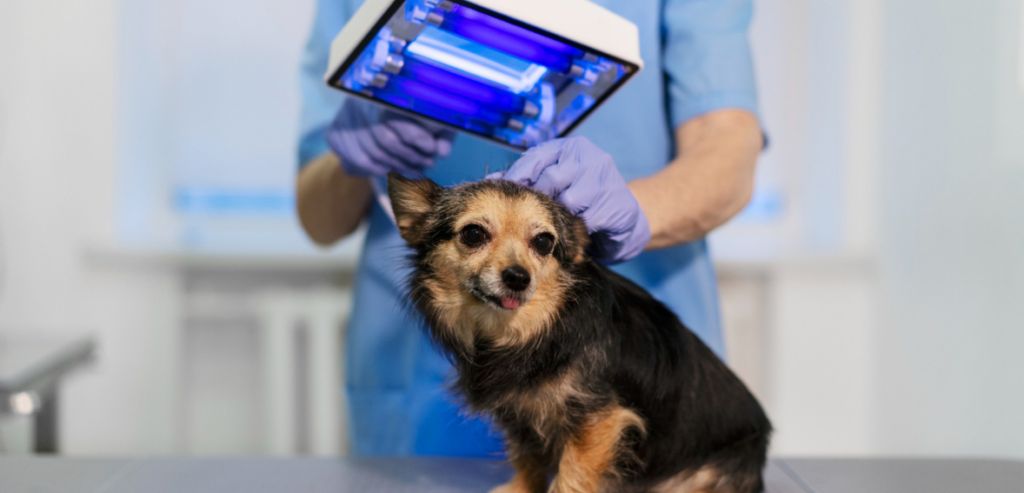
Monitoring patients after diagnosis and treatment is a critical component of veterinary healthcare. Chronic conditions, post-surgical recovery, medication management, and long-term wellness programs often require ongoing observation and follow-up. AI is helping clinics manage these responsibilities more effectively.
The digital monitoring system can gather information through wearable devices, tracking tools, and even by owner observation. These are then analyzed by AI algorithms to recognize patterns and signal the need for action whenever any change is detected. This continuous monitoring approach provides valuable insights between clinic visits.
Animal diagnostics technology is increasingly extending beyond the examination room and into everyday patient management. By supporting ongoing monitoring, AI helps veterinarians maintain closer oversight of patient health while enabling more proactive care strategies.
Strengthening Communication with Pet Owners
Effective communication is essential in veterinary medicine. Pet owners need clear information about diagnoses, treatment plans, medication instructions, and ongoing care requirements. Miscommunication can affect treatment adherence and overall patient outcomes.
AI-powered communication tools can assist clinics by generating educational materials, sending reminders, answering common questions, and providing follow-up information. These capabilities help ensure that pet owners receive timely and consistent communication throughout the care process.
Vet clinic innovation increasingly focuses on improving the client experience as well as clinical outcomes. Better communication strengthens trust, encourages engagement, and helps owners feel more confident in their pets’ care plans. AI can support these goals by making information more accessible and personalized.
Supporting Research and Knowledge Development
Veterinary medicine continues evolving as researchers develop new treatments, diagnostic approaches, and disease management strategies. Keeping pace with scientific advancements can be challenging given the growing volume of veterinary research and clinical information.
The use of AI in veterinary medicine enables researchers to conduct their work by making analysis of data much easier compared to traditional means. They will be able to observe certain trends, test treatments, and look at interrelationships that exist in medical data. These capabilities accelerate knowledge discovery and contribute to evidence-based practice development.
The insights generated through AI may help advance understanding of animal diseases, improve treatment protocols, and support the development of new therapeutic approaches. As research applications continue expanding, AI is likely to play an increasingly important role in veterinary innovation.
Challenges and Considerations in AI Adoption
Despite its potential benefits, the adoption of AI in veterinary medicine is not without challenges. Data quality remains a significant concern because AI systems depend on accurate and representative information to generate reliable results. Incomplete or biased datasets can affect performance and limit effectiveness.
Training and implementation also require careful planning. Veterinary professionals must understand how AI systems function, interpret recommendations appropriately, and recognize their limitations. Successful adoption depends on integrating technology into existing workflows without disrupting clinical operations.
Cost considerations may also influence adoption decisions, particularly for smaller practices. While AI technologies continue becoming more accessible, investments in software, training, and infrastructure may be required. Clinics must evaluate potential benefits alongside implementation costs and operational needs.
The Future of AI in Veterinary Care
The role of AI in veterinary healthcare is expected to expand significantly in the coming years. Advances in machine learning, predictive analytics, natural language processing, and data integration will likely create new opportunities for clinical and operational improvement.
Veterinary AI tools may become increasingly sophisticated, supporting personalized treatment planning, predictive health assessments, advanced imaging interpretation, and automated documentation. Integration with wearable devices and remote monitoring systems may further enhance patient care capabilities.
Innovation within the vet clinic field will keep on having a significant influence on the way veterinary care is delivered. Although the use of AI cannot replace veterinary experts, it is predicted that it will grow more relevant in their practice as time goes by. A partnership between both human knowledge and technology could benefit animal health.
Conclusion
AI is rapidly becoming an important part of modern veterinary healthcare. From imaging analysis and laboratory diagnostics to patient monitoring and administrative automation, AI technologies are helping veterinary professionals work more efficiently while supporting better clinical decision-making.
The growing use of AI in veterinary medicine reflects a broader movement toward data-driven healthcare that emphasizes accuracy, speed, and personalized care. As veterinary AI tools, animal diagnostics technology, AI veterinary software, and other forms of vet clinic innovation continue evolving, clinics will gain access to increasingly powerful resources for improving patient outcomes. While challenges related to implementation, training, and data quality remain important considerations, the potential benefits are substantial. By combining advanced technology with professional expertise, veterinary healthcare providers can continue enhancing the quality of care they deliver while preparing for a more connected and innovative future.