
Veterinary Clinic Compliance Best Practices: A Practical Guide for Safer Operations
Veterinary clinic compliance is the ongoing process of operating a veterinary facility in a way that supports patient care, protects clients and staff, maintains accurate records, and follows applicable practice requirements.
It touches almost every part of veterinary clinic management, from medical records and prescription handling to employee training, sanitation, data security, billing, and workplace safety.
For practice owners, veterinarians, clinic managers, animal hospital administrators, veterinary technicians, and operations teams, compliance is not just a paperwork task. It is a practical risk management system that helps a clinic run safely, consistently, and professionally.
A strong veterinary practice compliance program makes it easier to deliver quality care, communicate clearly with clients, and respond confidently when questions, audits, inspections, or incidents arise.
Compliance requirements can vary based on state veterinary board rules, clinic type, controlled substance handling, facility layout, staff structure, patient mix, technology systems, telemedicine services, and internal policies.
A small companion-animal clinic may face different workflows than an emergency hospital, specialty practice, mobile veterinary unit, or mixed-animal practice. Still, the core principles are similar: document carefully, train consistently, secure sensitive information, maintain safe work areas, and review procedures regularly.
This guide is for general educational purposes only. It is not legal, medical, regulatory, or veterinary board advice. Clinics should confirm requirements with qualified counsel, applicable regulatory agencies, state veterinary boards, and professional advisors.
What Veterinary Clinic Compliance Means
Veterinary clinic compliance means creating reliable systems that help a practice meet professional, operational, safety, recordkeeping, and regulatory responsibilities. It is broader than passing an inspection or keeping a binder on a shelf.
A compliant clinic builds everyday habits that reduce preventable errors, protect patient records, improve workplace safety, and support ethical veterinary practice.
At a practical level, veterinary clinic compliance includes written procedures, staff training, documentation standards, record retention rules, controlled substance tracking, pharmacy management, client communication protocols, billing records, equipment maintenance, sanitation practices, and incident reporting.
It also includes knowing when state veterinary board rules, DEA requirements, OSHA standards, FDA animal drug rules, and payment security expectations may apply.
The AVMA notes that its professional policies are guidance for the profession and do not replace law or regulation, which is a useful reminder for clinic leaders: professional guidance, state practice acts, and enforceable rules are related but not identical. Clinics should use professional resources as support while confirming actual obligations with the right authorities.
Veterinary regulatory compliance is also an internal management discipline. The best-run practices do not wait until something goes wrong to organize records or update safety training.
They build compliance into normal workflows, such as appointment intake, exam documentation, prescription refills, anesthesia monitoring, inventory counts, staff onboarding, and end-of-day closing tasks.
For example, a technician documenting a vaccine lot number, a veterinarian recording informed consent, and a practice manager reviewing sharps disposal procedures are all participating in veterinary practice compliance. A receptionist confirming client contact information and a billing team protecting payment data are also part of the compliance system.
Why Veterinary Practice Compliance Matters
Veterinary practice compliance matters because it supports safe care, reliable records, staff protection, client trust, and long-term clinic stability.
When compliance is weak, problems often appear as “small” gaps at first: a missing consent form, an incomplete drug log, an unsigned treatment plan, an outdated safety data sheet, or a staff member who never received documented training.
Over time, those gaps can create clinical confusion, operational risk, workplace injuries, billing disputes, inventory loss, or regulatory exposure.
Accurate medical records help veterinarians understand a patient’s history, allergies, diagnostics, medications, and treatment response. Controlled substance logs help prevent diversion and support accountability.
Workplace safety programs reduce risk from animal bites, sharps injuries, hazardous drugs, disinfectants, radiology equipment, waste anesthetic gases, and zoonotic exposure. Data security policies help protect client information, patient records, and payment details.
Compliance also improves consistency across the team. In a busy animal hospital, different veterinarians, veterinary technicians, client service representatives, kennel assistants, and managers may interact with the same patient or client.
Written standard operating procedures make expectations clearer and reduce the chance that each person performs the same task differently.
For multi-doctor practices and emergency clinics, compliance supports continuity during shift changes. For specialty clinics, it helps document complex treatment plans, referrals, diagnostics, and anesthesia records.
For mobile veterinary practices, it helps maintain secure records, safe storage, controlled substance handling, and client communication outside a traditional facility. For mixed-animal practices, it may also involve food animal drug rules, withdrawal times, field records, and transport considerations.
There is also a business reason to take veterinary hospital compliance seriously. Well-organized documentation can help resolve client questions, insurance requests, charge disputes, employment issues, supplier questions, and audit preparation.
Compliance does not guarantee that a clinic will avoid problems, but it can make the practice more prepared, more transparent, and more resilient.
Understanding Veterinary Clinic Regulations and Responsibilities
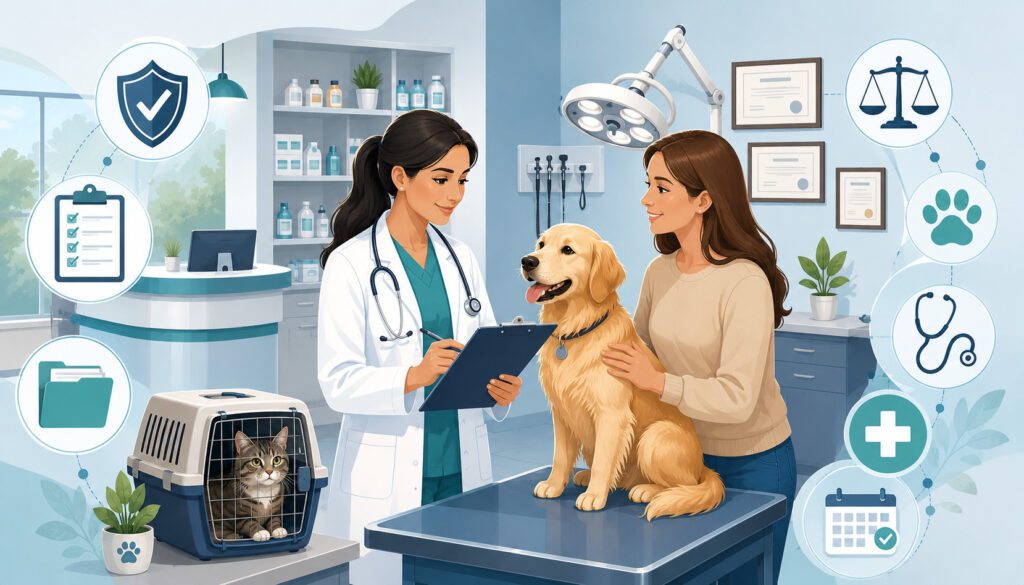
Veterinary clinic regulations come from several sources, and that is why compliance can feel complicated.
A practice may need to consider state veterinary board rules, controlled substance requirements, workplace safety standards, animal drug rules, local business requirements, waste disposal rules, radiology requirements, employment laws, data protection expectations, and payment security obligations. The exact mix depends on the clinic’s services, facility, staff, and technology.
State veterinary board rules often address licensure, supervision, veterinary-client-patient relationship requirements, medical recordkeeping, prescription standards, continuing education, delegation to veterinary technicians or assistants, and professional conduct.
Clinics should keep a current copy of applicable practice rules and review them when changing services, hiring new roles, expanding locations, or adopting telemedicine tools.
Controlled substance handling introduces another compliance layer. The DEA Practitioner’s Manual is designed to help practitioners, including veterinarians, understand federal controlled substance responsibilities.
Clinics that order, store, administer, dispense, or prescribe controlled substances need strong systems for registration, storage, inventory, logs, disposal, theft or loss response, and access control.
Workplace safety is another major area. NIOSH guidance for veterinary workplaces recommends comprehensive, workplace-specific safety and health programs that include leadership, worker participation, hazard identification, prevention and control, training, evaluation, and communication. It also emphasizes documentation of staff training, immunizations, and work-related injuries or illnesses.
FDA animal drug rules may also affect prescription decisions, extra-label drug use, labeling, and food animal considerations. FDA guidance on extra-label drug use explains that approved human and animal drugs may be used outside the label under specified conditions and within a valid veterinarian-client-patient relationship.
A good compliance program does not assume one rule covers everything. Instead, it maps responsibilities by category and assigns owners.
For example, the medical director may oversee medical record standards, the practice manager may oversee training files and safety documentation, and a designated inventory lead may reconcile pharmacy and controlled substance records.
Medical Recordkeeping and Patient Documentation Best Practices

Veterinary recordkeeping compliance is one of the most important parts of veterinary clinic compliance because patient records support medical decision-making, client communication, continuity of care, billing accuracy, and professional accountability.
Incomplete or unclear medical records can create confusion long after an appointment ends, especially when a patient returns for follow-up care, sees a different veterinarian, visits after hours, or needs a referral.
A complete record should show what was observed, what was discussed, what was recommended, what the client approved or declined, what treatment was provided, and what follow-up is needed. The record should be timely, legible, organized, and easy for another qualified team member to understand.
Veterinary medical records are often governed by state-level rules, including what must be documented, how long records must be retained, who may access them, and how they may be transferred. Because these requirements vary, every clinic should confirm its own veterinary practice regulations rather than relying on general assumptions.
Digital systems can improve consistency when used well. Veterinary Business Guide’s article on cloud veterinary systems discusses how digital platforms can centralize medical records, billing, appointment management, inventory, and client communication.
The compliance benefit is not just convenience; it is better access, clearer documentation, controlled permissions, and easier record retrieval when policies are followed.
Veterinary medical records
Veterinary medical records should tell the patient’s clinical story. At minimum, they should capture patient identification, client information, presenting complaint, history, physical exam findings, assessment, diagnostics, diagnosis or differential diagnosis, treatment plan, medications, prescriptions, client communications, discharge instructions, and follow-up recommendations.
For hospitalized patients, records should also show progress notes, treatments administered, monitoring, nursing observations, and changes in condition.
Small clinics often struggle with late charting because veterinarians and technicians are moving quickly between appointments. Multi-doctor practices may struggle with consistency because each doctor has a different documentation style. Emergency clinics may face added pressure because cases move quickly and records are often transferred to primary veterinarians.
Templates can help, but they should not replace clinical judgment. A good template prompts the team to document what matters without creating copy-and-paste notes that fail to reflect the actual patient encounter.
Informed consent forms
Informed consent documentation helps show that the client understood the proposed care, expected benefits, material risks, alternatives, estimated costs, and likely consequences of declining treatment.
Consent is especially important for anesthesia, surgery, dentistry, hospitalization, euthanasia, complex diagnostics, medication changes, and treatment plans with meaningful risk or cost.
A strong consent process is not just a form. It includes a conversation, an opportunity for questions, documentation of client decisions, and clear notes about what was approved or declined. Consent forms should be specific enough to support the procedure being performed and should match the actual treatment plan.
For example, if a patient is admitted for dental treatment and extractions may be needed, the form should explain how authorization will be handled.
Will the client approve a range in advance? Will the veterinarian call before extractions? What happens if the client cannot be reached? These details matter for patient care and client trust.
Consent forms should be reviewed periodically by leadership and appropriate advisors. Outdated forms, vague language, missing signatures, and inconsistent use are common compliance mistakes.
Treatment plan documentation
Treatment plans are a bridge between medical recommendations and client decision-making. A well-documented treatment plan should include recommended diagnostics, therapies, medications, procedures, monitoring, estimated costs, expected follow-up, and alternatives when appropriate. When clients decline or defer care, that decision should be documented respectfully and clearly.
Treatment plan documentation is especially important in urgent care, emergency medicine, specialty referrals, chronic disease management, surgery, dentistry, oncology, and end-of-life care.
These situations often involve emotional clients, complex choices, and financial considerations. Clear documentation helps keep the team aligned and reduces misunderstandings.
For veterinary technicians and client service representatives, treatment plan documentation also supports workflow. The team can see what the veterinarian recommended, what the client approved, which medications should be prepared, and what instructions must be reviewed before discharge.
Avoid vague notes such as “client declined workup” without details. A better note explains what was recommended, why it was recommended, what the client chose, and what follow-up or warning signs were discussed.
Controlled Substance, Pharmacy, and Prescription Compliance

Veterinary controlled substance compliance is a high-risk area because clinics may order, store, administer, dispense, prescribe, waste, and dispose of drugs that are closely regulated. Weak logs, unsecured storage, poor inventory reconciliation, unclear access rules, and inconsistent documentation can expose a practice to serious operational and regulatory problems.
Veterinary DEA compliance starts with knowing who is registered, which locations are covered, who may access controlled substances, how drugs are stored, and how records are maintained. Federal rules require certain controlled substance records and inventories to be maintained in prescribed ways, and clinics should also check state rules that may add requirements.
Pharmacy management also includes non-controlled medications, vaccines, prescription diets, compounded medications, preventives, and supplies. Veterinary clinic compliance requires attention to expiration dates, labeling, prescription records, storage temperatures, lot numbers when applicable, manufacturer guidance, and inventory accuracy.
Veterinary Business Guide’s article on building a vet clinic inventory par system is a useful operational companion because medication availability, expiration control, and purchasing discipline are closely tied to pharmacy compliance and patient care.
Prescription records
Prescription records should document what was prescribed, the patient, the client, the prescribing veterinarian, the medication name, strength, quantity, directions, refills, date, and relevant clinical basis.
When a prescription is dispensed in-house, the clinic should also document labeling, lot or inventory details when needed, and client counseling.
Prescription compliance becomes more complex when clinics use online pharmacies, outside pharmacies, refill portals, written prescriptions, telemedicine, or compounded medications. Staff should know who may approve refills, when a veterinarian must review the record, and what conditions require an updated exam or diagnostic monitoring.
Extra-label drug use must be handled carefully. FDA information explains that extra-label use is permitted only under specified conditions and within a valid veterinarian-client-patient relationship. Clinics should document the medical rationale, client instructions, and any food animal restrictions when relevant.
Controlled substance logs
Controlled substance logs should be complete, accurate, timely, and reconciled. They should show receiving, administration, dispensing, wasting, transfers when permitted, disposal, inventory counts, and discrepancies.
Logs should identify the drug, strength, form, quantity, date, patient, client, prescriber, user, remaining balance, and witness when required by policy or rule.
AAHA’s controlled substance log resources are designed to help veterinary teams maintain DEA-focused recordkeeping and internal accountability, including logs for opened and unopened containers, inventory reconciliation, near-miss incidents, expired substances, and inventory forms.
A common mistake is treating the log as a back-office task that can be completed later. Delayed entries increase the chance of inaccurate balances and missed discrepancies. Another mistake is relying on one person without oversight. Controlled substance access should be limited, but the compliance system should not depend entirely on one employee.
For emergency clinics and animal hospitals operating around the clock, shift-based reconciliation is useful. For mobile practices, secure storage and transport logs need special attention. For mixed-animal practices, field use should be documented with the same discipline as in-clinic use.
Pharmacy inventory controls
Pharmacy inventory controls help prevent stockouts, expired medications, ordering errors, waste, theft, and treatment delays. A good inventory system defines who may order, receive, stock, adjust, dispense, and dispose of medications.
It also sets minimum and maximum levels for critical drugs, vaccines, anesthesia supplies, emergency medications, and frequently used products.
Inventory management should include regular cycle counts, expiration checks, temperature logs for refrigerated items, vaccine storage procedures, controlled access, supplier invoice review, and separation of expired or recalled products. Clinics should document corrective actions when they discover expired medications, temperature excursions, or missing inventory.
For specialty clinics and emergency hospitals, inventory controls may need to account for high-cost medications, specialty drugs, chemotherapy agents, blood products, oxygen, and critical-care supplies. For mobile clinics, the team should track what leaves the main facility, how it is stored, and what returns.
Workplace Safety, OSHA, and Employee Training
Veterinary OSHA compliance and veterinary workplace safety are central to a responsible clinic operation. Veterinary teams face unique hazards, including bites, scratches, kicks, lifting injuries, sharps injuries, anesthetic gases, hazardous drugs, disinfectants, laboratory samples, zoonotic disease exposure, radiology, noise, and stress-related risks. A safe clinic protects staff while supporting better patient care.
OSHA’s hazardous drug guidance states that many of the same drugs used to treat people are also used to treat animals and that the guidance can apply to veterinary practices where workers are occupationally exposed. This is especially relevant for clinics handling chemotherapy drugs, certain hormones, anesthetic agents, and other hazardous medications.
A strong safety program should include written policies, hazard assessments, personal protective equipment, training documentation, incident reporting, emergency procedures, safety data sheets, equipment maintenance, and regular review.
NIOSH recommends workplace-specific safety programs that include hazard identification, prevention and control, staff education, and program improvement.
OSHA workplace safety
OSHA workplace safety expectations are built around providing a safe work environment and addressing recognized hazards.
In a veterinary clinic, this may include hazard communication for chemicals, personal protective equipment, sharps safety, respiratory protection when applicable, bloodborne pathogen considerations, radiation safety, waste anesthetic gas controls, and injury reporting.
The clinic should keep safety data sheets available for disinfectants, laboratory chemicals, pesticides, cleaning agents, and other hazardous materials. Staff should know where they are stored and how to use them. Personal protective equipment should be appropriate for the task, available in the right sizes, and replaced when damaged.
Safety procedures should be specific to actual clinic workflows. A policy that sits in a binder but does not match how staff restrain animals, clean isolation areas, handle sharps, or process laboratory samples will not be effective.
Staff safety training
Staff safety training should begin during onboarding and continue at regular intervals. Training should cover animal handling, bite prevention, sharps safety, lifting, chemical handling, radiology safety, anesthesia safety, infection control, PPE use, emergency response, incident reporting, and role-specific hazards. Veterinary technicians, assistants, kennel staff, receptionists, and doctors may need different training based on their tasks.
Documentation is as important as the training itself. Training records should show the topic, date, trainer, attendees, materials used, and any competency check. For hands-on tasks, clinics should document that the employee demonstrated the skill, not just that they read a policy.
Client service representatives should not be overlooked. They may face aggressive client behavior, lobby animal incidents, cleaning chemical exposure, and emergency triage communication risks. A safe clinic includes front-desk workflows, panic procedures, de-escalation guidance, and clear communication channels.
Refresher training is especially important after incidents. If a needlestick occurs, a dog bite happens during restraint, or a staff member mishandles a chemical, the clinic should document the incident, review the root cause, update training if needed, and follow through.
Hazardous materials handling
Hazardous materials in veterinary practices may include disinfectants, formalin, laboratory reagents, pesticides, anesthetic gases, chemotherapy drugs, radiology chemicals in some facilities, oxygen, and certain medications. Each material should be labeled, stored, used, and disposed of according to applicable instructions and safety procedures.
The clinic should maintain safety data sheets and train employees on hazard communication. Staff should understand exposure routes, required PPE, spill response, ventilation needs, storage incompatibilities, and reporting procedures.
For hazardous drugs, clinics should consider special handling procedures for receiving, preparation, administration, waste, contaminated laundry, and spill cleanup.
Mixed-animal practices may also handle farm chemicals, reproductive drugs, biological samples, and field equipment that create additional exposure risks. Mobile practices should have transport procedures for chemicals, sharps, pharmaceuticals, and contaminated materials.
Hazardous materials compliance is not only about avoiding fines. It prevents staff injuries, protects patients, reduces environmental risk, and helps clinics respond properly when spills or exposures occur.
Sanitation, Infection Control, and Facility Safety Practices
Sanitation and infection control are essential parts of veterinary clinic safety compliance. Veterinary facilities handle patients with wounds, parasites, respiratory disease, gastrointestinal illness, surgical sites, contagious conditions, and unknown exposure histories.
Without consistent sanitation protocols, pathogens can move between patients, staff, clients, equipment, cages, exam rooms, treatment areas, vehicles, and boarding spaces.
A strong infection control program should include cleaning schedules, disinfectant selection, contact times, isolation procedures, laundry handling, hand hygiene, PPE use, waste disposal, instrument cleaning, cage cleaning, exam room turnover, and environmental monitoring. The clinic should also define who is responsible for each task and how completion is documented.
Facility safety includes more than cleaning. It also covers equipment maintenance, fire safety, emergency exits, oxygen storage, radiology areas, slip and fall prevention, ventilation, lighting, restraint equipment, laundry areas, parking lots, mobile units, and building repairs.
Sharps disposal
Sharps disposal is one of the most visible areas of veterinary workplace safety. Needles, scalpel blades, suture needles, dental wires, glass ampules, lancets, and other sharp items can injure staff and expose them to biological hazards. OSHA describes contaminated sharps as objects that can penetrate skin and may carry blood or other potentially infectious materials.
Sharps containers should be puncture-resistant, leak-resistant, labeled or color-coded as required, located close to the point of use, kept upright, and replaced before overfilling.
Staff should never recap needles by hand unless a specific procedure requires it and safer alternatives are not feasible. If recapping is unavoidable, a one-handed technique or appropriate device should be used.
Training should cover where sharps containers are located, what goes into them, what does not, when to replace them, and how to respond to needlestick injuries. Incident reports should document injuries, contributing factors, and corrective actions.
Radiology safety
Radiology safety protects staff, patients, and clients from unnecessary radiation exposure. Clinics that perform radiographs should maintain clear procedures for equipment use, shielding, exposure settings, positioning, dosimetry when applicable, signage, restricted areas, and equipment inspections. Staff should be trained before operating radiology equipment or assisting with imaging.
The safest approach is to reduce repeat exposures through proper positioning, sedation when appropriate, good technique, and equipment maintenance. Manual restraint during radiographs should be minimized when positioning aids or sedation can safely reduce exposure risk. Pregnant staff or staff with medical concerns should know how to request guidance and alternative duties under clinic policy.
Records may include radiology logs, equipment service records, staff training, dosimetry reports, inspection documents, and safety policies. Specialty hospitals and emergency clinics with high imaging volume should review radiology workflows regularly because speed and urgency can increase the risk of shortcuts.
Radiology compliance can vary by jurisdiction, so clinics should confirm applicable registration, inspection, shielding, and staff monitoring requirements.
Equipment maintenance
Equipment maintenance supports patient safety, staff safety, accurate diagnostics, and compliance documentation.
Veterinary practices rely on anesthesia machines, vaporizers, oxygen systems, autoclaves, dental units, radiology equipment, laboratory analyzers, refrigerators, centrifuges, scales, monitoring devices, surgical lights, pumps, and mobile equipment. If these tools fail or drift out of calibration, patient care and documentation can suffer.
Maintenance records should show the equipment name, serial number if available, location, service date, work performed, vendor or staff member, next due date, and corrective actions. Anesthesia and monitoring equipment deserve special attention because failures can create immediate patient risk.
Vaccine storage is another key area. Refrigerators should be monitored, temperatures should be logged, and staff should know what to do if temperatures move outside accepted ranges. Laboratory equipment should be cleaned and maintained according to manufacturer guidance, and abnormal quality control results should be documented.
Data Security, Privacy, and Client Information Protection
Veterinary data security compliance is increasingly important because clinics collect and store client names, addresses, phone numbers, payment details, patient histories, prescription records, lab results, imaging, referral letters, consent forms, and staff information.
As veterinary practices adopt cloud systems, online forms, text messaging, portals, telemedicine platforms, and digital payments, data protection becomes part of daily operations.
Client privacy in veterinary medicine is not identical to human healthcare privacy rules, but that does not mean clinics can treat records casually. State veterinary board rules, client expectations, payment security requirements, contracts, and general business duties may all affect how information is stored, shared, and protected.
Data security policies should address user access, passwords, multi-factor authentication, device use, remote access, backups, software updates, phishing, email attachments, text communication, record sharing, vendor access, and breach response. Staff should know what information may be shared, with whom, and how identity should be verified before releasing records.
Veterinary Business Guide’s article on vet practice technology and workflow management can support broader thinking about how technology affects daily operations, staff coordination, and digital record handling.
Data security policies
Data security policies should be written, practical, and easy for staff to follow. They should define authorized users, access levels, password rules, device restrictions, remote login requirements, backup procedures, and steps for reporting suspicious activity. A policy that is too technical or unrealistic will be ignored during busy clinic hours.
Clinics should limit access based on role. For example, client service representatives may need scheduling and billing access, while technicians need medical record access, and managers need reporting access.
Former employees should be removed promptly from practice management software, email, payment systems, cloud storage, and vendor portals.
Backups are critical. Clinics should know how often records are backed up, where backups are stored, who can restore them, and whether the process has been tested. Ransomware, hardware failure, accidental deletion, and natural disasters can all disrupt access to records.
Client privacy
Client privacy requires clear rules for discussing cases, releasing records, communicating by email or text, posting on social media, and responding to third-party requests. Staff should avoid discussing patient details in public areas where other clients can overhear. They should also confirm client identity before sharing sensitive information.
Medical records should be released only according to applicable rules and clinic policy. Referral hospitals, emergency clinics, insurance companies, boarding facilities, groomers, shelters, rescues, law enforcement, and family members may all request information.
Staff should know when client authorization is needed and when a veterinarian or manager should review the request.
Social media creates special risk. A photo of a patient, unusual case, or surgical success story may seem harmless, but clinics should obtain appropriate permission before sharing identifiable information. Internal chat tools also need guardrails because screenshots and messages can spread beyond their intended audience.
Client trust depends on discretion. A clinic that protects information carefully signals professionalism, respect, and operational maturity.
Payment, Billing, and Financial Record Compliance
Payment, billing, and financial records are part of animal hospital compliance because they connect client communication, treatment plan approval, deposits, invoices, refunds, insurance documentation, payment security, and accounting controls.
Billing errors can become client service problems, but they can also create compliance issues if charges do not match records, refunds are not documented, or payment data is handled insecurely.
Payment security is especially important for clinics that accept cards, online payments, payment links, recurring wellness plan payments, deposits, or stored payment methods. The PCI Security Standards Council explains that protecting payment data requires people, process, and technology working together.
Financial record compliance should include invoices, estimates, signed treatment plans, payment receipts, refunds, credits, adjustments, discounts, write-offs, deposits, accounts receivable, vendor invoices, payroll records, inventory purchases, and tax-related documentation. Access to financial systems should be limited by role, and adjustments should be reviewed.
Treatment estimates and invoices should match the medical record. If the patient received an injection, medication, diagnostic test, hospitalization service, or procedure, the medical record and invoice should be consistent. If a service was declined, that should be documented as well.
Billing records
Billing records should be accurate, timely, and tied to the patient record. A good billing workflow starts before treatment is performed. The team should prepare a clear estimate, review it with the client, document approval, update the plan if care changes, and provide an invoice that reflects what was actually done.
Common billing compliance risks include undocumented discounts, inconsistent estimate approvals, missing deposits, invoice corrections without explanation, unapproved refunds, and charges entered under the wrong patient.
These mistakes can happen easily in busy clinics, especially when front-desk teams are handling phones, checkouts, emergencies, and medication pickups at the same time.
Clinic managers should review adjustment reports, open invoices, refunds, unpaid balances, and high-risk transactions. This is not about mistrusting staff. It is about building normal financial controls that protect the practice and the team.
Payment security
Payment security requires clinics to protect cardholder data and reduce unnecessary exposure. Staff should not write card numbers on paper, store card details in unsecured notes, send payment information through unprotected messages, or allow unauthorized users into payment systems. Payment terminals, online payment tools, and practice management integrations should be configured securely.
Clinics should train staff to recognize suspicious payment requests, refund scams, phishing emails, and unusual client account activity. Remote payment workflows should be documented, including how payment links are sent, how identity is verified, and how failed payments are handled.
For mobile veterinary practices, payment security includes device management. Phones, tablets, card readers, and laptops should be password-protected, updated, and controlled. Public Wi-Fi should be avoided for sensitive transactions unless secure protections are in place.
Payment compliance should also support transparency. Clients should understand estimates, deposits, financing terms when applicable, refund policies, and payment expectations before services are performed whenever possible.
Compliance Risks in Telemedicine, Online Forms, and Digital Tools
Telemedicine, online forms, client portals, digital signatures, remote payments, automated reminders, and cloud-based records can improve veterinary practice management. They can also create compliance risks if the clinic does not define how these tools fit into medical decision-making, recordkeeping, privacy, consent, and state veterinary board rules.
The AVMA emphasizes that a veterinarian-client-patient relationship is critical when practicing veterinary medicine, whether care is provided in person or remotely through telemedicine. Because telemedicine rules vary, clinics should confirm what is allowed before diagnosing, prescribing, or establishing care remotely.
Online forms should not disappear into a separate system. Client-submitted histories, consent forms, anesthesia questionnaires, refill requests, behavior updates, and post-operative concerns should become part of the medical record when relevant. Staff should know who reviews online submissions and how quickly.
Digital tools also require vendor oversight. Before adopting a new platform, clinics should consider access controls, data ownership, backups, integration with the medical record, audit trails, privacy practices, payment security, and staff training.
Telemedicine documentation
Telemedicine documentation should be as thoughtful as in-person documentation. The record should show the communication method, participants, patient identification, presenting concern, history, visual observations if applicable, advice given, limitations of the remote assessment, follow-up recommendations, prescriptions if allowed, and emergency instructions.
A common mistake is treating telemedicine as informal advice that does not need a complete record. If the veterinarian is making clinical recommendations, the documentation should support what was discussed and why. If the case requires in-person evaluation, that recommendation should be clear.
Telemedicine is useful for some follow-ups, triage, behavior discussions, nutrition counseling, chronic condition check-ins, hospice support, and post-operative progress checks. It is not appropriate for every case. Clinics should define which case types may be handled remotely and which must be seen in person.
Online forms and digital consent
Online forms can improve efficiency, but only if they are reviewed, stored, and acted upon correctly. A client may submit a history form, anesthesia consent, new patient form, medication refill request, or estimate approval before arriving. The clinic should ensure that the right team member reviews the form before care decisions are made.
Digital consent should include a reliable signature process, date and time capture, the correct client, the correct patient, and the specific procedure or treatment being authorized. If the treatment plan changes after the client signs, the record should show updated communication and approval.
Online forms should be written clearly and should not ask for unnecessary sensitive information. They should also be accessible to clients who are not comfortable with digital tools. A paper or phone-based alternative may be needed to avoid workflow gaps.
Staff should avoid copying online form information into the wrong record. Patient matching is a real compliance issue, especially in multi-pet households.
How to Build a Veterinary Compliance Checklist
A veterinary compliance checklist gives the team a structured way to evaluate current workflows, identify gaps, assign responsibility, and document improvement. It should be practical rather than overwhelming. A checklist that is too broad may be ignored; one that is too narrow may miss important risks.
Start by dividing compliance into major areas: licensing and practice rules, medical records, consent, pharmacy, controlled substances, OSHA and workplace safety, sanitation, radiology, equipment maintenance, employee training, data security, payment security, telemedicine, billing, and incident reporting. Then list the documents, logs, training records, and procedures needed for each area.
The checklist should be reviewed by leadership and updated when services change. Adding surgery, dentistry, boarding, grooming, rehabilitation, urgent care, mobile services, telemedicine, or specialty procedures can change compliance needs. Hiring new roles can also change delegation, supervision, and training requirements.
A checklist should not be used only before an audit. It should support routine management. Monthly mini-audits are often more effective than one large annual review because they catch problems earlier.
| Compliance Area | Why It Matters | Common Risk | Best Practice |
| Medical records | Supports patient care, continuity, and accountability | Missing exam findings, incomplete plans, late notes | Use templates, complete records promptly, audit samples monthly |
| Informed consent | Documents client understanding and authorization | Generic forms, missing signatures, unclear approvals | Use procedure-specific forms and document discussions |
| Prescription records | Supports safe medication use and refill decisions | Missing directions, unclear refill approval, weak labeling | Standardize prescription documentation and refill protocols |
| Controlled substances | Prevents diversion and supports DEA-related documentation | Inaccurate balances, delayed log entries, unsecured access | Reconcile logs routinely and limit access |
| Pharmacy inventory | Reduces expired drugs, stockouts, and waste | Overstocking, expired meds, missing temperature logs | Use par levels, cycle counts, and expiration checks |
| OSHA and workplace safety | Protects employees from recognized hazards | Outdated training, missing PPE, weak incident reporting | Maintain written safety procedures and training records |
| Sanitation and infection control | Reduces disease transmission | Inconsistent cleaning, wrong disinfectant contact time | Use cleaning logs and isolation protocols |
| Sharps disposal | Reduces needlestick and cut injuries | Overfilled containers, unsafe recapping | Place containers near use areas and train staff |
| Radiology safety | Reduces unnecessary exposure | Poor positioning, missing records, weak training | Maintain logs, shielding, and training documentation |
| Data security | Protects client and patient information | Shared passwords, former employee access, weak backups | Use role-based access and multi-factor authentication |
| Payment security | Protects payment data and financial trust | Written card numbers, unsecured devices, refund errors | Follow payment security procedures and review adjustments |
| Telemedicine | Supports remote care within appropriate limits | Undocumented advice, unclear VCPR status | Use telemedicine protocols and note templates |
| Incident reporting | Helps identify and correct risks | Unreported bites, needlesticks, client incidents | Use non-punitive reporting and corrective action tracking |
| SOPs | Creates consistency across the team | Policies not written, outdated, or unused | Review SOPs regularly and train staff on changes |
Compliance audits
Compliance audits do not need to be intimidating. A useful audit is simply a structured review of whether the clinic’s procedures are being followed and documented. The audit may review a sample of medical records, controlled substance logs, training files, safety documents, consent forms, invoices, equipment maintenance logs, and data access records.
Internal audits should be scheduled and documented. For example, the practice manager may review staff training records quarterly, the medical director may review medical records monthly, and the inventory lead may reconcile controlled substance logs weekly or more often depending on clinic volume and policy.
When an audit finds a gap, the clinic should document the corrective action. This might include retraining staff, updating a form, changing software permissions, revising an SOP, adding a checklist, or assigning a new owner.
Standard operating procedures
Standard operating procedures turn expectations into repeatable workflows. A veterinary clinic should have SOPs for medical records, appointment intake, consent, estimates, anesthesia records, controlled substances, prescription refills, inventory, cleaning, isolation, sharps disposal, radiology, equipment maintenance, incident reporting, data security, payment handling, and emergency response.
Good SOPs are specific, current, and usable. They should explain who performs the task, when it happens, what steps are required, where documentation is stored, and what to do if something goes wrong. They should be written for the team that actually uses them, not copied from a generic template without adaptation.
SOPs should be part of onboarding and refresher training. When a policy changes, staff should receive notice, training if needed, and time to ask questions. Managers should observe whether the SOP works in practice.
A small clinic may keep SOPs in a shared digital folder. A large animal hospital may use a formal document control system. Either way, staff should know where to find the current version.
Incident reporting
Incident reporting helps clinics learn from problems before they repeat. Reportable incidents may include animal bites, scratches, needlesticks, chemical exposures, medication errors, anesthesia events, client injuries, staff injuries, aggressive client behavior, equipment failures, data incidents, missing controlled substances, vaccine storage excursions, and near misses.
A non-punitive reporting culture is important. If staff fear punishment for every report, they may stay silent until a problem becomes serious. Leadership should encourage timely reporting, investigate the cause, and focus on prevention.
Incident reports should include what happened, when it happened, who was involved, immediate actions taken, witnesses, follow-up care, client communication when applicable, and corrective actions. Sensitive personnel or medical details should be handled carefully and stored appropriately.
Patterns matter. One dog bite may be an isolated event. Several bites during nail trims may show a restraint, scheduling, sedation, or training problem. Incident reporting turns individual events into operational insight.
Common Veterinary Compliance Mistakes to Avoid
Many veterinary compliance mistakes happen because clinics are busy, not because teams are careless. The pace of appointments, emergencies, surgery drop-offs, prescription requests, client calls, inventory deliveries, and staff changes can push documentation and safety tasks to the side. The solution is to design workflows that make the right action easy to complete.
One common mistake is incomplete medical records. Notes may lack exam findings, assessment, client communication, declined recommendations, medication details, or discharge instructions. This can create confusion later, especially if the patient worsens, transfers care, or returns after hours.
Another common mistake is weak controlled substance documentation. Delayed entries, unexplained discrepancies, shared access, missing witness signatures, and poor inventory reconciliation can quickly become serious. Clinics should treat controlled substance logs as high-priority records, not optional administrative paperwork.
Poor staff training is also common. A clinic may have written policies but no proof that staff were trained. Training should be documented and repeated when roles, equipment, products, or procedures change.
Outdated safety procedures create risk. A clinic may use new disinfectants, add dental radiology, start chemotherapy, expand boarding, or adopt telemedicine without updating SOPs. Compliance should evolve with the practice.
Unsecured client data is another growing issue. Shared passwords, unlocked screens, old employee accounts, unencrypted devices, and casual record sharing can expose sensitive information. Veterinary data security compliance should be reviewed whenever a new digital tool is adopted.
Inconsistent consent forms can also create problems. A clinic may use one form for many procedures even when the risks, costs, and decisions are different. Consent should match the care being provided.
Missing incident reports are a hidden risk. If bites, needlesticks, medication errors, or client injuries are handled informally, leadership loses the chance to fix root causes.
What is veterinary clinic compliance?
Veterinary clinic compliance is the process of following applicable practice requirements and maintaining safe, consistent, well-documented operations. It includes medical records, informed consent, prescription records, controlled substance logs, workplace safety, sanitation, employee training, data security, billing records, and standard operating procedures.
The goal is not just to satisfy regulators. Good compliance supports patient care, protects staff, improves client communication, reduces operational risk, and helps the clinic respond confidently to questions, incidents, or audits.
Why is veterinary practice compliance important?
Veterinary practice compliance is important because veterinary clinics manage medical decisions, controlled substances, client records, staff safety, financial transactions, and sensitive communication.
Weak compliance can lead to patient care confusion, workplace injuries, client disputes, missing records, inventory loss, data exposure, and regulatory problems.
Strong compliance creates consistency. It helps every team member understand what to document, how to handle risks, where to find procedures, and when to escalate concerns.
What records should veterinary clinics maintain?
Veterinary clinics should maintain patient records, exam notes, diagnostics, treatment plans, informed consent forms, prescription records, anesthesia records, surgery records, vaccine details, laboratory results, imaging reports, controlled substance logs, inventory records, billing records, staff training files, safety documentation, equipment maintenance logs, incident reports, and relevant client communications.
Specific recordkeeping requirements can vary by state veterinary board rules and clinic services. Practices should confirm retention, access, and transfer rules that apply to their location and practice type.
How can clinics manage controlled substance compliance?
Clinics can manage veterinary controlled substance compliance by limiting access, maintaining accurate logs, reconciling inventory, documenting receiving and use, separating records when required, securing storage, training staff, investigating discrepancies, and following disposal procedures. The DEA Practitioner’s Manual is a key federal resource for practitioners who handle controlled substances.
A designated person should oversee the process, but responsibility should not depend on memory. Written SOPs, routine reconciliation, and management review are essential.
What workplace safety rules should veterinary clinics consider?
Veterinary clinics should consider safety requirements and best practices related to hazard communication, PPE, sharps safety, injury reporting, chemical handling, hazardous drugs, animal restraint, radiology safety, waste anesthetic gases, sanitation, zoonotic disease prevention, emergency response, and staff training.
NIOSH recommends workplace-specific safety and health programs for veterinary and animal care workers, including hazard identification, prevention, training, and program evaluation.
How can veterinary clinics protect client and patient data?
Clinics can protect data by using role-based access, strong passwords, multi-factor authentication, secure backups, updated software, device controls, staff training, careful record release procedures, and vendor review. Former employee access should be removed promptly, and staff should avoid sending sensitive information through unsecured channels.
Data security policies should cover practice management software, email, texting, online forms, cloud storage, payment systems, and remote access.
What are common veterinary compliance mistakes?
Common mistakes include incomplete medical records, missing consent forms, weak controlled substance logs, poor staff training documentation, outdated SOPs, unsecured client data, inconsistent prescription records, missing incident reports, expired medications, incomplete equipment maintenance logs, and unclear telemedicine documentation.
Most mistakes can be reduced with checklists, templates, staff training, routine audits, and clear ownership.
How often should veterinary clinics review compliance policies?
Veterinary clinics should review compliance policies regularly and whenever operations change. A practical approach is to review high-risk areas, such as controlled substances, medical records, safety incidents, and data access, more frequently. Broader SOPs can be reviewed on a scheduled basis and updated when new services, technology, staff roles, or facility changes occur.
Regular review keeps policies aligned with real workflows and current requirements.
Conclusion
Veterinary clinic compliance is not a one-time project or a binder that only comes out during an inspection. It is a practical operating system that helps veterinary teams provide safer care, maintain accurate records, protect staff, secure client information, manage medications responsibly, and reduce avoidable risk.
The strongest compliance programs are built into daily work. They use clear SOPs, thoughtful training, reliable documentation, secure technology, consistent supervision, and routine self-audits. They also recognize that requirements can vary by state rules, clinic type, controlled substance handling, services offered, facility design, and digital tools.
For a small veterinary clinic, compliance may begin with better medical record templates, updated consent forms, and a simple safety checklist.
For a multi-doctor animal hospital, it may involve department-level SOPs, formal audits, role-based software access, and more robust pharmacy controls. For emergency, specialty, mobile, or mixed-animal practices, compliance workflows should reflect the realities of faster cases, complex treatments, field conditions, or species-specific requirements.
The best approach is steady improvement. Start with the highest-risk areas: medical records, controlled substances, workplace safety, prescription documentation, data security, sanitation, and incident reporting. Assign owners, set review schedules, document training, and update policies as the clinic evolves.
Veterinary compliance best practices ultimately support the same goal as good medicine: safer decisions, clearer communication, better teamwork, and stronger trust between the clinic, its clients, its patients, and its staff.